We left our crowded anchorage in Deshaies, Guadeloupe, carefully avoiding another catamaran that had unhelpfully parked themselves over our anchor. The route out of Deshaies took us through a minefield of fishermen’s buoys that marked their fishing nets. We were on guard, scanning the sea for a good 6 nm before we could relax and settle down into what we hoped would be an uneventful sail to the northernmost tip of Montserrat.
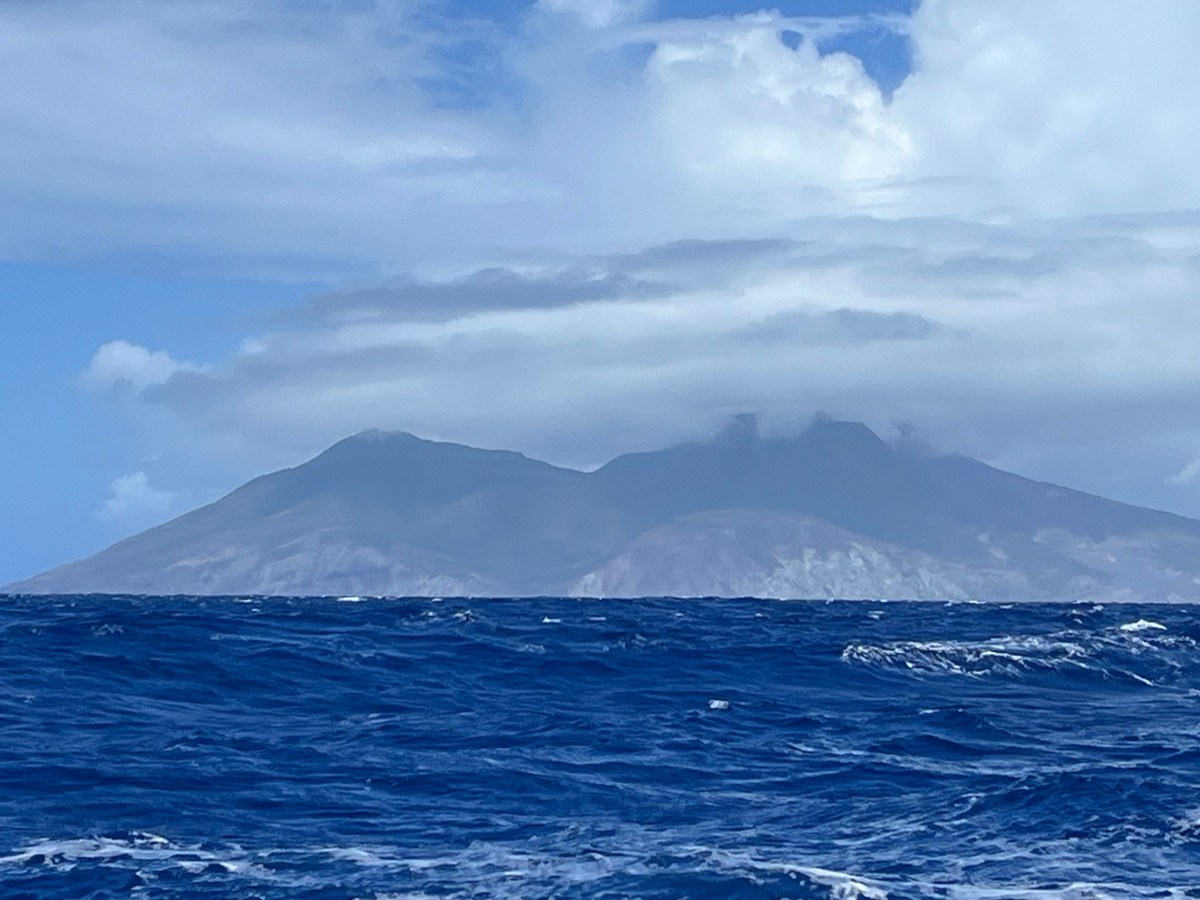
We had chosen to sail along the windward Atlantic coast of Montserrat hoping for a fast sail across the 40 odd nm to our destination. This turned out to be a questionable decision. Once across the channel between Guadeloupe and Montserrat, we headed North, North-West keeping a healthy distance from the lee shore to our west. The huge swells that typically make up the Atlantic side of most Caribbean islands should not have been a surprise, but nevertheless it was- an unpleasant one. To our west, we could see volcanic ash fields from the Soufrière Volcano, a sobering reminder of the island’s volatile past and uncertain future. Our progress was slow, but we eventually reached the north headland and started our rounding of the coast.
The swells along the headland were worse and we battled the huge wind driven waves that battered Jajabor relentlessly. After what seemed an eternity, we were pointing south and nearing our destination of Little Bay where we would be checking in to Customs and Immigration.

The bay was empty except for a single sail boat. Montserrat is not a popular sailing destination, but the island’s cultural and natural history had peaked our curiosity.
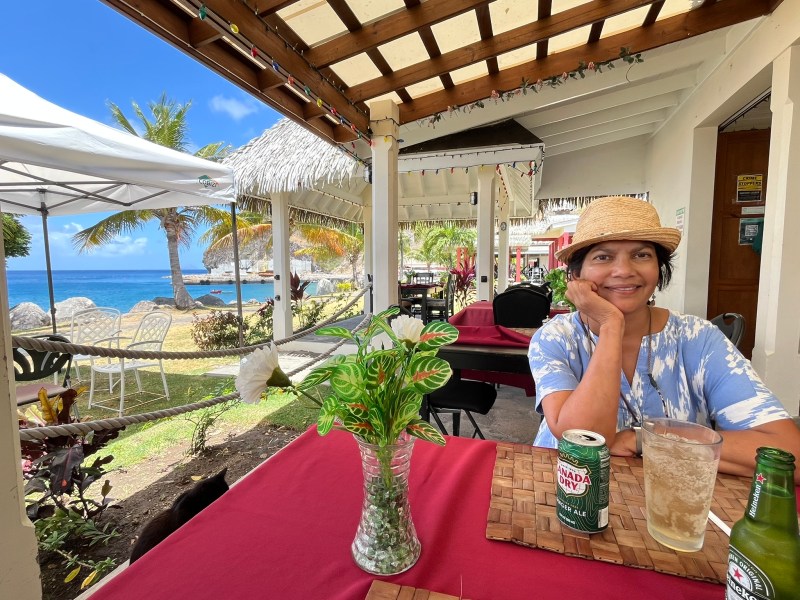
Enjoying a drink in a beautiful yet mostly empty beach front
We had arranged for a guided tour of the island, and Mr. Phillip arrived exactly as advertised: a proud Montserratian and a survivor of the Soufrière disaster. This was not going to be a chatty, anecdotal tour filled with light banter and amusing asides. Mr. Phillip was here to educate. He spoke with the gravity of a man recounting lived history, detailing the eruption and its devastating aftermath with solemn precision.
As we drove away from the bay, Swagata listened in the abstract while simultaneously conducting a much more serious investigation of the scenery passing by the van window. Every so often she would ask a casual question—usually about something Mr. Phillip had explained moments earlier—which had the unfortunate effect of suggesting she had not been paying attention. This did not sit well with him.
Each interruption was met with a brief pause, a measured look, and then a slightly louder, more detailed repetition of the explanation. I, meanwhile, said nothing. I am long accustomed to Swagata not listening to me; Mr. Phillip, however, clearly was not.
It was astonishing to find out from him, that this tiny island is behind some of the biggest musical hits of my generation. Huge names like The Police, Paul McCartney, Dire Straits, and Elton John all recorded some of their most famous songs right here in Montserrat. It all started when Sir George Martin—the legendary producer behind the Beatles—built AIR Studios near his home in the little town of Salem. Musicians loved coming to Montserrat for the calm Caribbean vibe and the chance to escape their hectic lives so they could focus purely on making music.
In the mid-1980s, Dire Straits spent three months on the island recording Brothers in Arms. Whenever they got stuck trying to get the sound they wanted, they’d just grab their boards and go windsurfing—letting the ocean clear their heads before heading back to the studio. The album ended up being a massive hit, and the rest, as they say, is history.
To really understand Montserrat, you have to look at what life was like here in the 1980s and early ’90s. Back then, the island was surprisingly developed—more so than many of its Caribbean neighbors. The capital, Plymouth, was buzzing, and Montserrat’s fame as a world-class recording hotspot brought in tourists, music lovers, and big-name artists. With a population of over 11,000 people, the island felt full of promise and ready to grow even more.
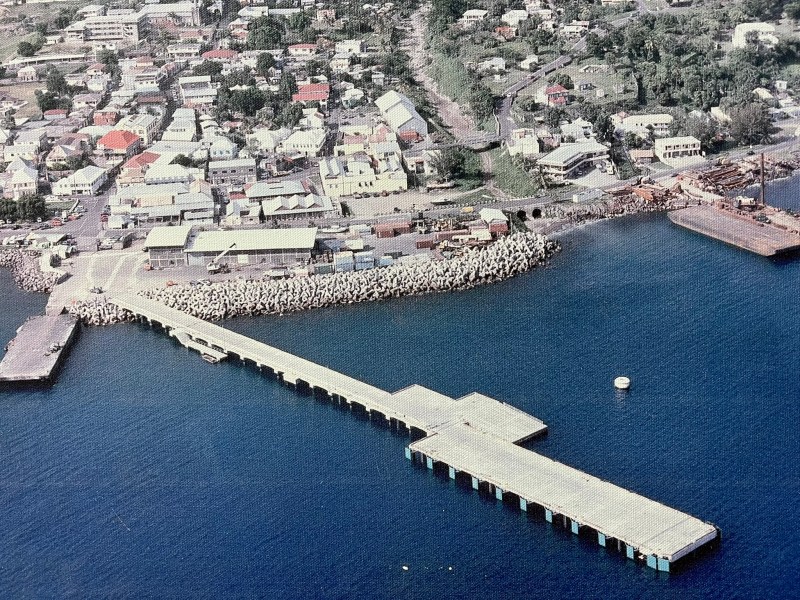
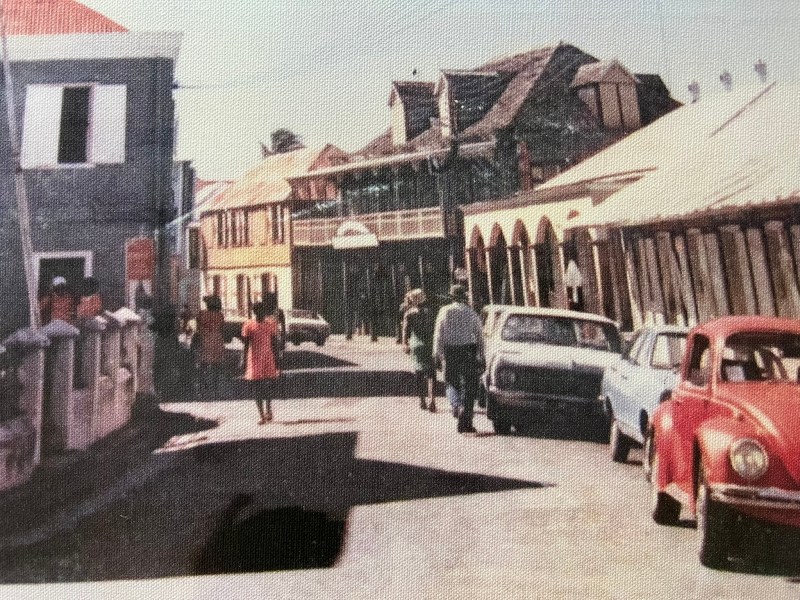
(L) Plymouth (pre-1995)- the vibrant capital of Monserrat *
(R) One of the city streets *

The waterfront (pre-1995) *
But everything changed in 1995 with the eruption of the Soufrière Hills Volcano.

Soufriere eruption *
The volcano continued to erupt regularly until 2010. Pyroclastic flows completely destroyed the international airport and buried Plymouth under ash and debris. More than half of the island became uninhabitable and was designated an exclusion zone extending well into coastal waters. The population fell from around 11,000 to fewer than 3,000 and has since stabilized at about 5,000. Although the last eruption occurred in 2013 and the hazard level is now considered low, the volcano remains seismically active.

Plymouth buried under ash and debris *
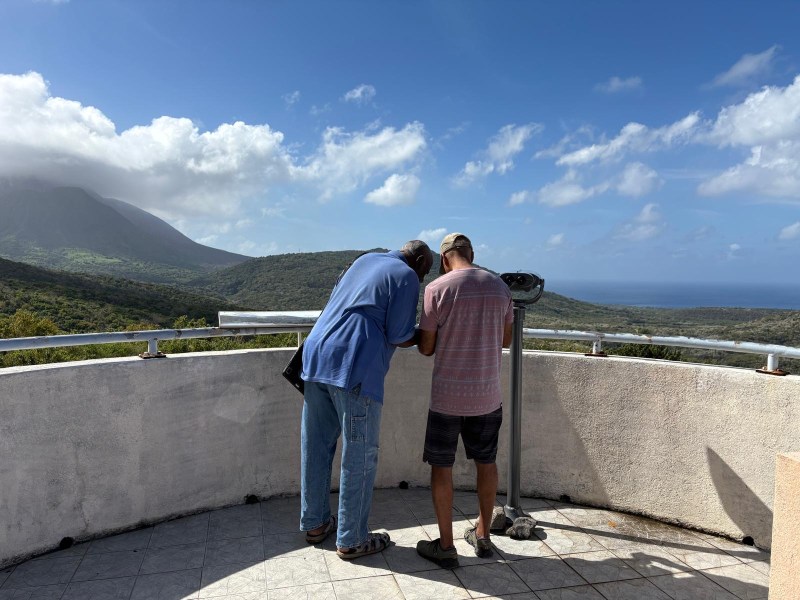
Phillip explaining details of the Soufriere eruptions

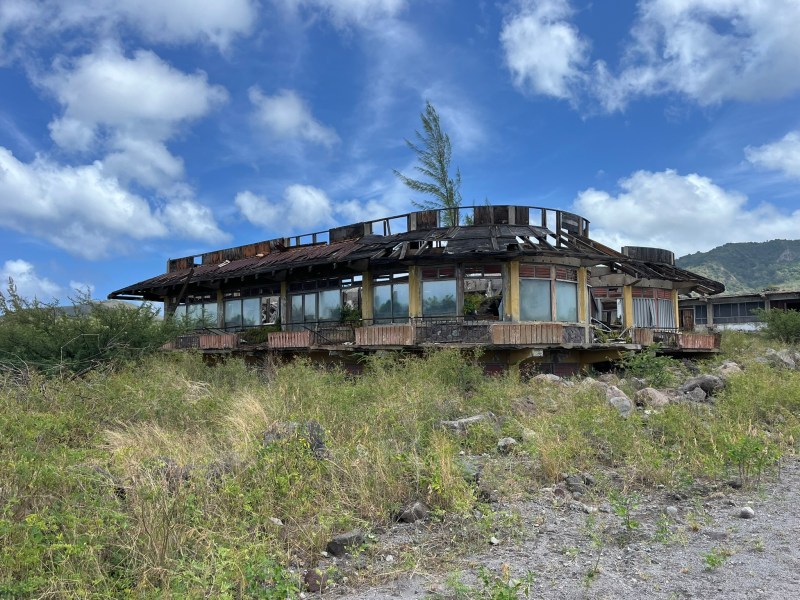
A 4-story building has only the top floor exposed *
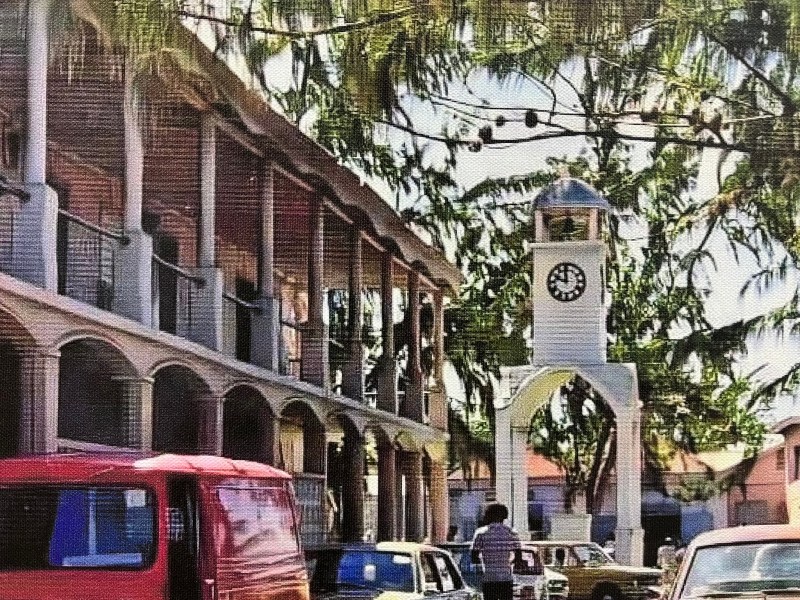

Clock Tower before and after the eruptions *
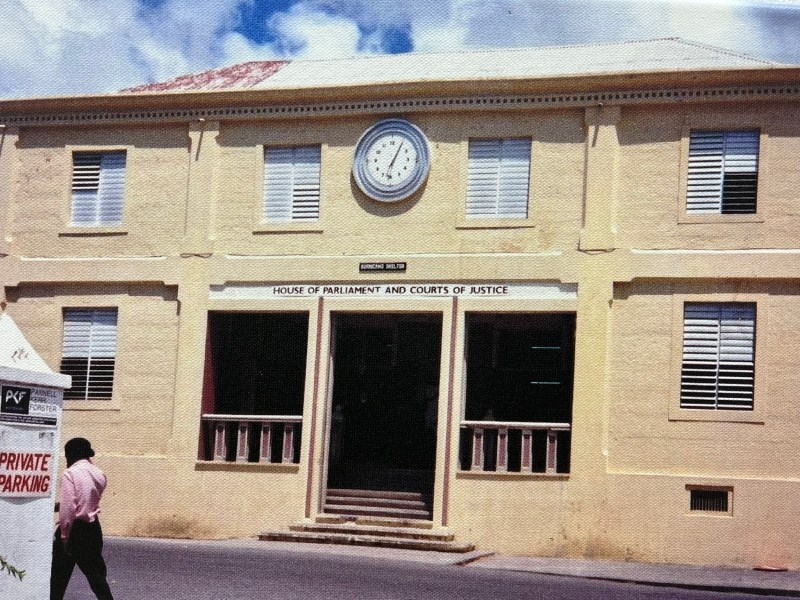

Parliament House and Judicial court before and after the eruptions *
Every time it rains, more ash washes down the volcano’s slopes into Plymouth and the nearby areas, burying what’s left of the old town a little deeper. The rich volcanic soil and abundant rainfall have turned the place into a tangle of thick greenery, making it harder and harder to see where houses and buildings once stood. At this rate, Plymouth is slowly becoming a tropical forest growing over a lost city—a kind of Caribbean Pompeii in the making.
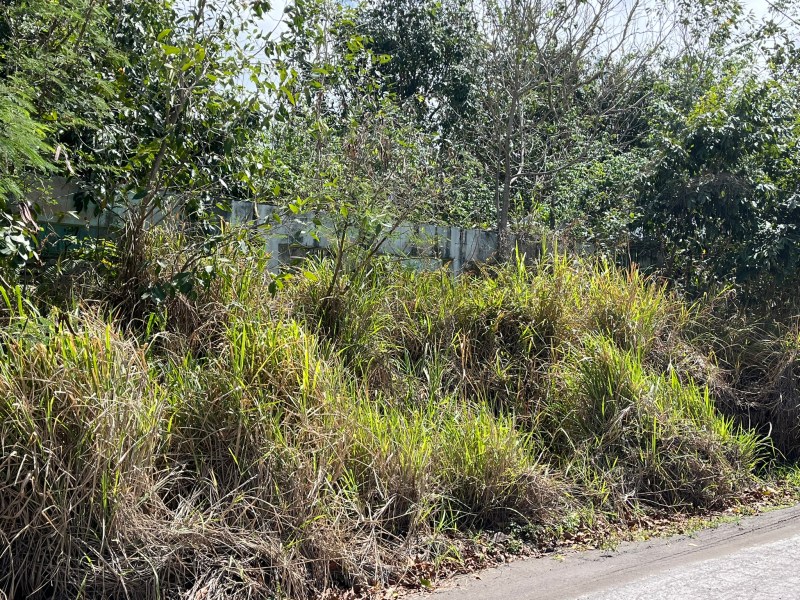
Sliver of a house showing through the foliage
As the saying goes, “When life gives you lemons, make lemonade.” Montserrat has taken that to heart by turning its abundance of volcanic sand into a valuable resource. Mining and exporting this sand for construction is now one of the island’s major industries. Several licensed operators are involved, and we even got to visit one of the sites inside the exclusion zone.

But despite that silver lining, tourism has really taken a hit. There are no ferries connecting Montserrat to the nearby islands, and even though you can practically see Antigua from shore, a short flight there costs hundreds of dollars. Hardly any sailors stop here anymore, either. While thousands of boats pack the waters of Antigua to the north and Guadeloupe to the south, we counted no more than three during the entire week we were on the island.

View of Soufriere from the Volcano Observatory.
While still deemed active – currently it is calm, almost serene

Even the fear of eruptions will not deter Swagata from beach combing
for shells and ocean glass in the exclusion zone
Montserrat is a beautiful island, but sadly it now feels as though it’s surviving mostly on aid from the UK. Still, there are people like Phillip—people for whom this place is home—who are determined to rebuild their island from the ashes. I truly hope that one day Montserrat will be a thriving Caribbean destination again, with a sustainable economy and all the magic that once helped create some of the best music of my generation. I will be back for the simple reason that I did not get to try “goat water”, the national dish of Montserrat this time around.
* Copyright ‘The National Museum of Monserrat’. These pictures were taken at different times over the last 30 years. The National Museum is a small museum curated by a dedicated staff and is definitely worth a visit. It is walking distance from Little Bay.
 Sailing Jajabor
sooooo interesting to hear about your adventure in Monserrat. I would read the biography of Olaudah Equiano who was a slave there, to my classes. He eventually bought his freedom and became a great abolishonist. What a great corner of the world you experienced!!!!!! eric
LikeLike
Hi Eric: Thank you for that information. I will look it up. It’s always good to hear from you and thank you for reading
LikeLike