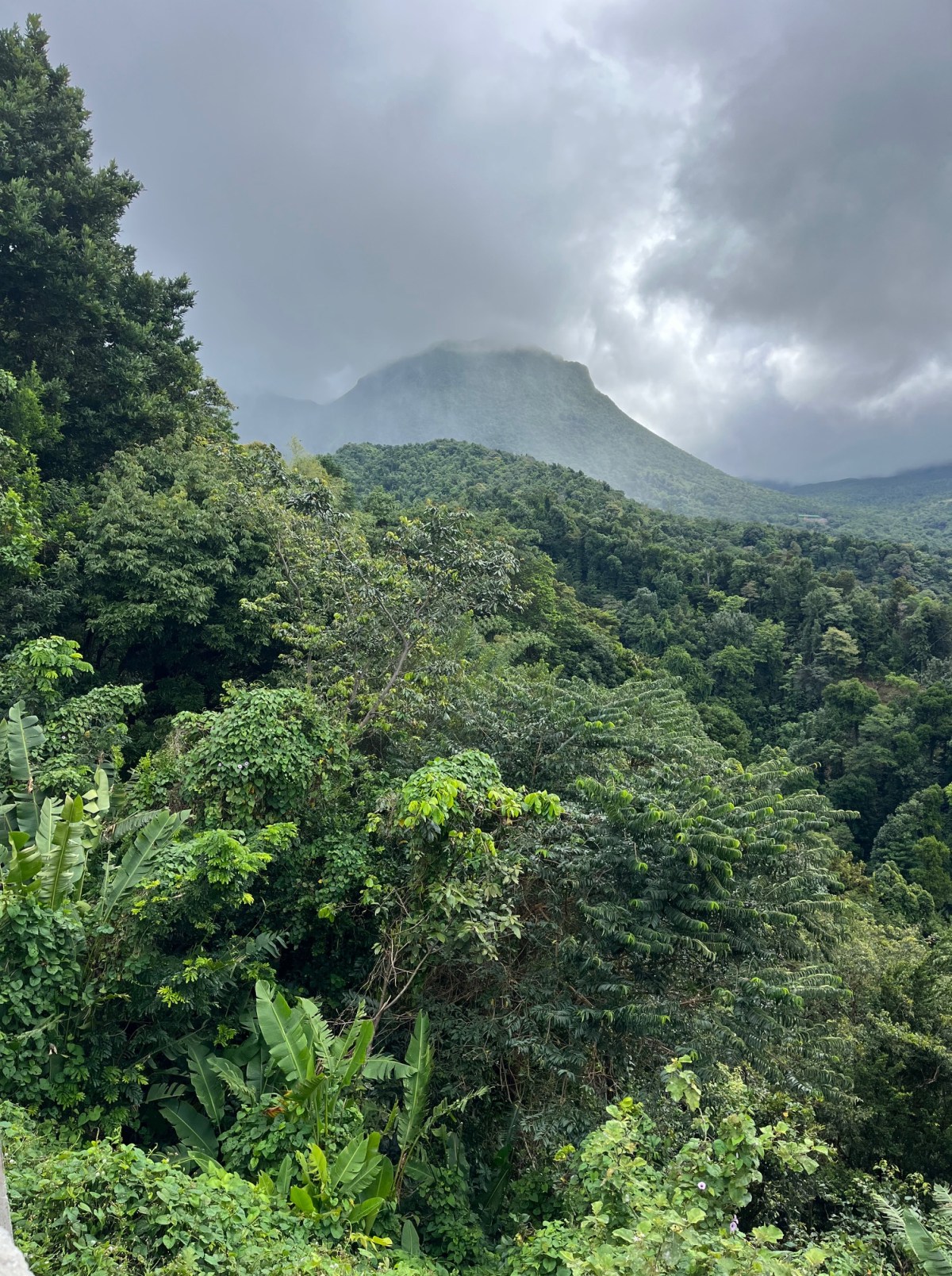
Dominica has long been on our bucket list of places to visit and we were looking forward to our stay here. We sailed from Martinique to our first port of call -Roseau, the Capital City. As we pulled into the anchorage we were greeted by “Roots” who helped us to a mooring managed by SeaCat. This was to be our base for the next 4 days of exploration. Roots chided me for being too cheap to take his water taxi in for custom clearance. His boat had been out of commission for a month and he was looking to make up the lost income; and so I relented and for $20 he was to take us to the town dock for clearance into Dominica, and back to our boat.
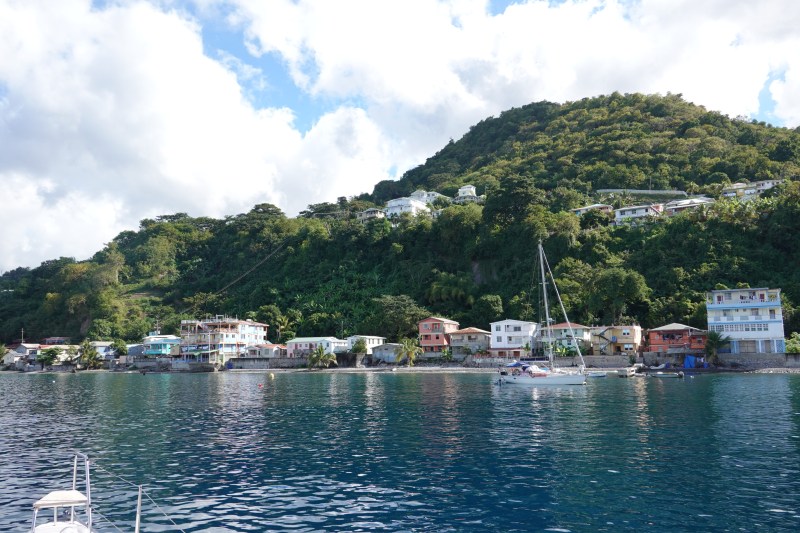
View of the Roseau waterfront from our boat
The visit into town coincided with a visiting Cruise ship, and the town was festive with visitors and locals who had setup shop along the waterfront. We were ready for lunch and after much searching, decided to go to the Fort Young Restaurant. Fort Young was built by the British in 1761, on the site of a wooden French Fort, when they captured the island. Like most places in the Caribbean, the history of Dominica is a ping pong of French and British ownership. Each has left its mark on Dominican culture, food and language.
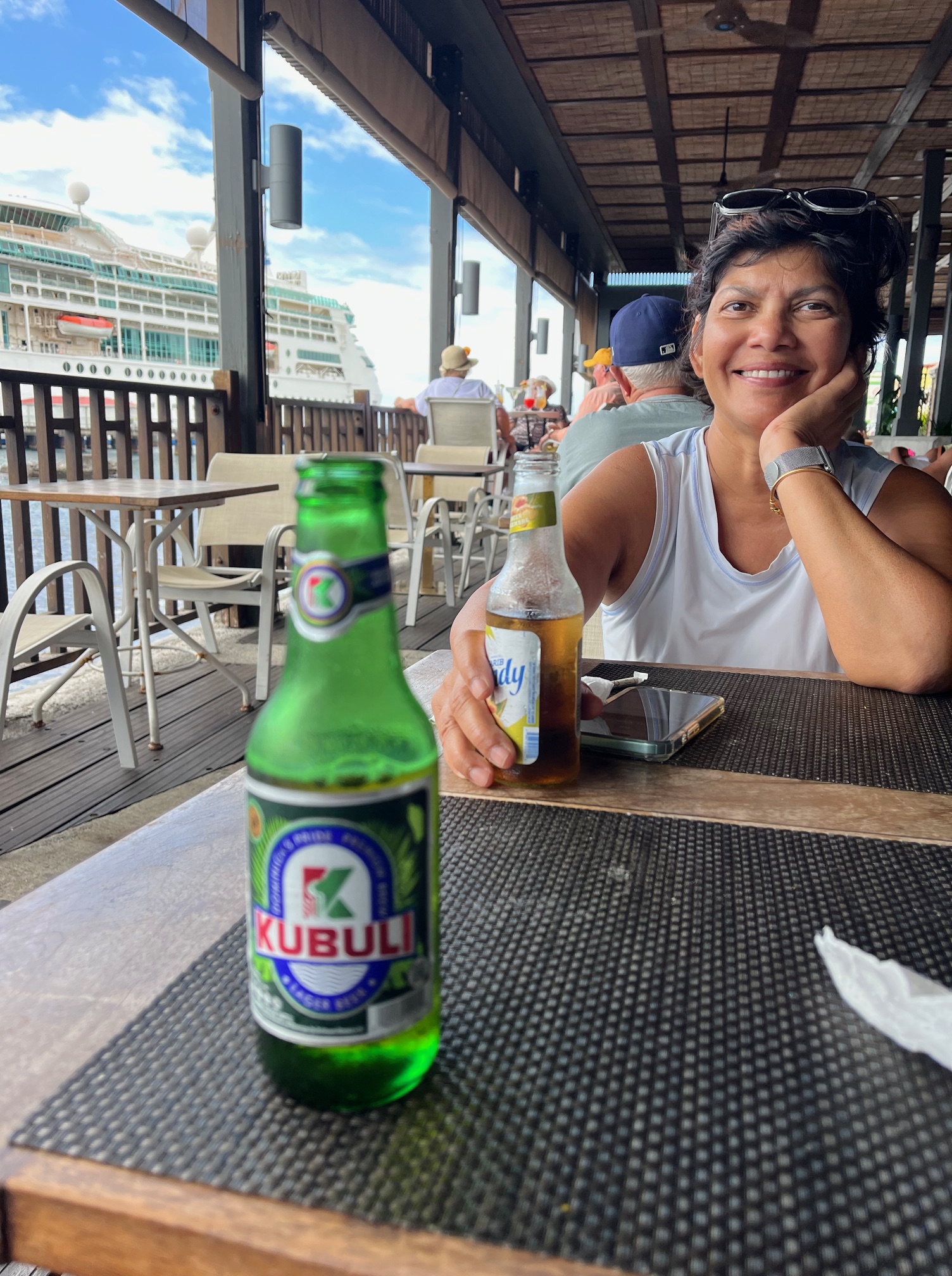

(L) In Fort Young, Roseau: If the beer is Kubuli then one must be in Dominica!
(R) Helping tow “Roots” disabled water taxi back to the dock
We planned on touring the island over the next few days. The next morning, Roots came over to taxi us to the SeaCat dock from where we would travel by van to various locations planned for the day. We stopped by another catamaran to pick up additional passengers. One of the passengers was Chris Doyle, an author of various cruising guides that we refer to when we sail to different islands. Chris is in his 80’s and is a fit and sprightly man. He is well known in the islands having visited them several times over the years. He was to be part of our tour as well. This chance encounter was a real fun start to our Dominican explorations. Chris turned out to be an informative and interesting co traveler.

Middleham Falls
Our first stop was Middleham Falls trailhead. This trail starts out as a gentle incline crossing streams along the way. It then climbs somewhat steeply for short sections leveling off enough to allow us to catch our breaths. We hiked through lush dense rain forest in a soft rain. The trail was slippery in sections and we made our way carefully to avoid landing in the muddy trail. Octavius, our guide for this trail pointed out many plants and trees. After about an hour we reach the falls which was quite impressive. After a brief visit, we turned around and make our way back downhill at a much faster pace. It was about a 3 hour trip over roughly 3 miles.
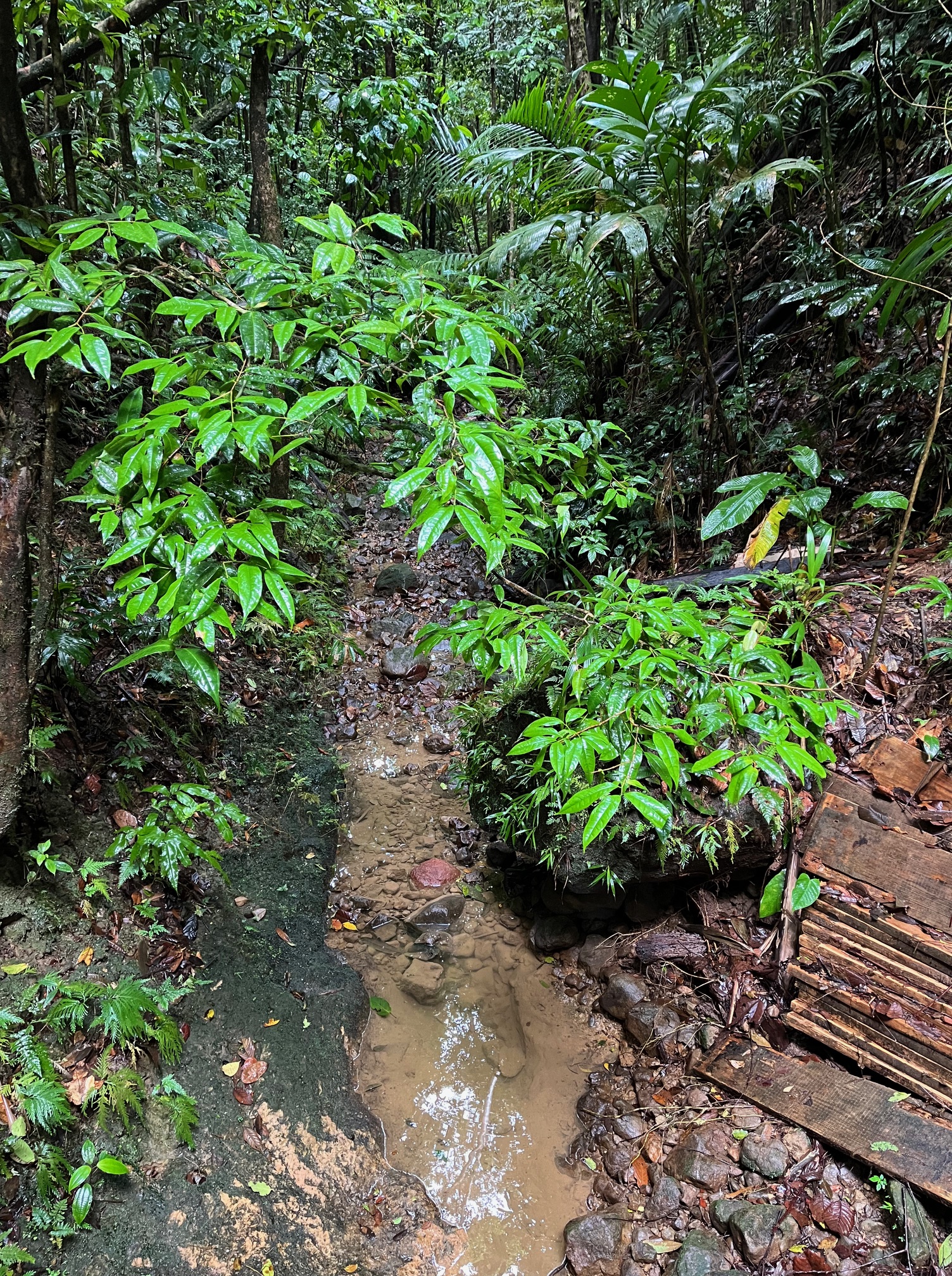
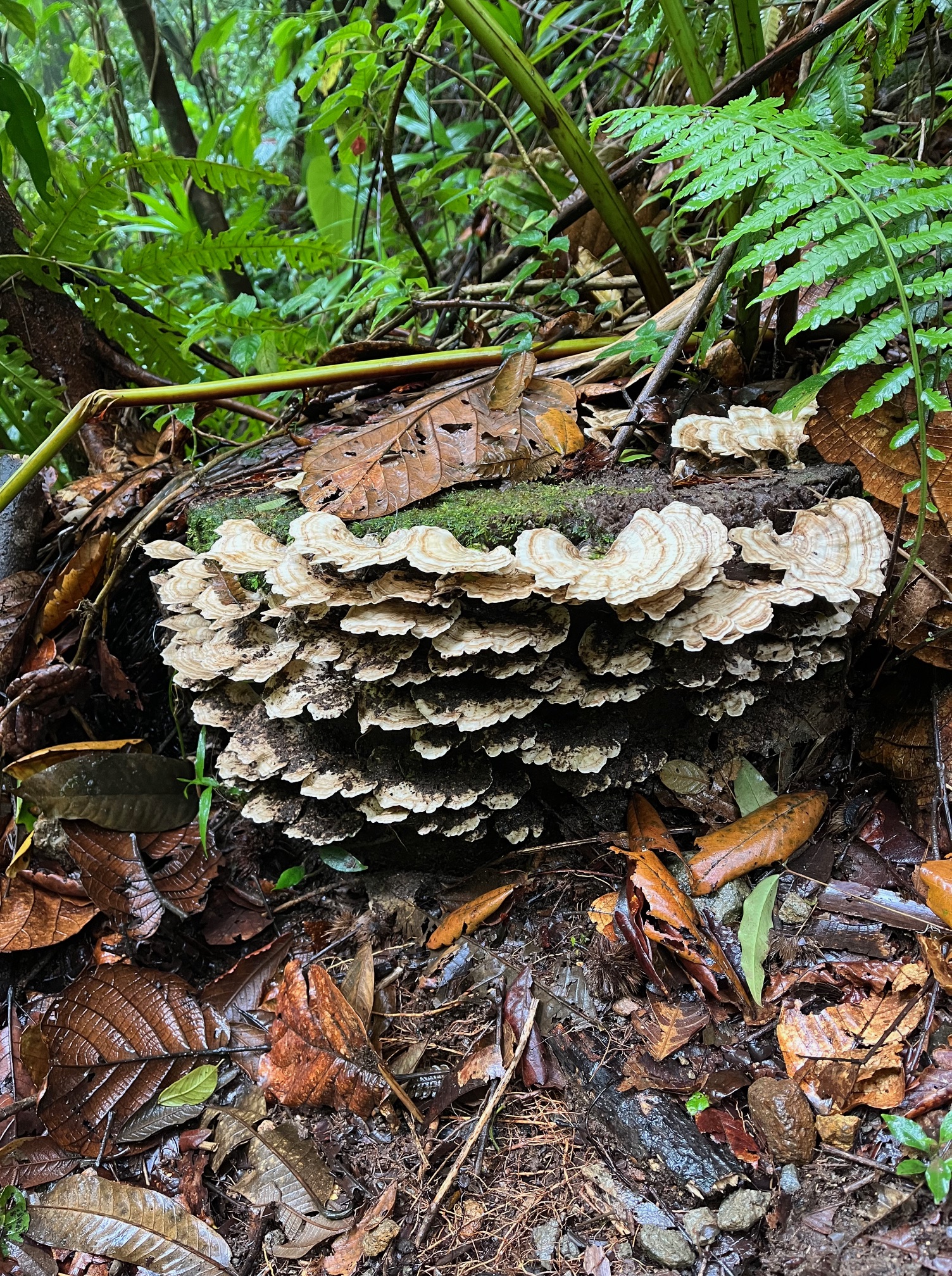
The trail goes through dense forest with all kinds of tropical plants and fungi
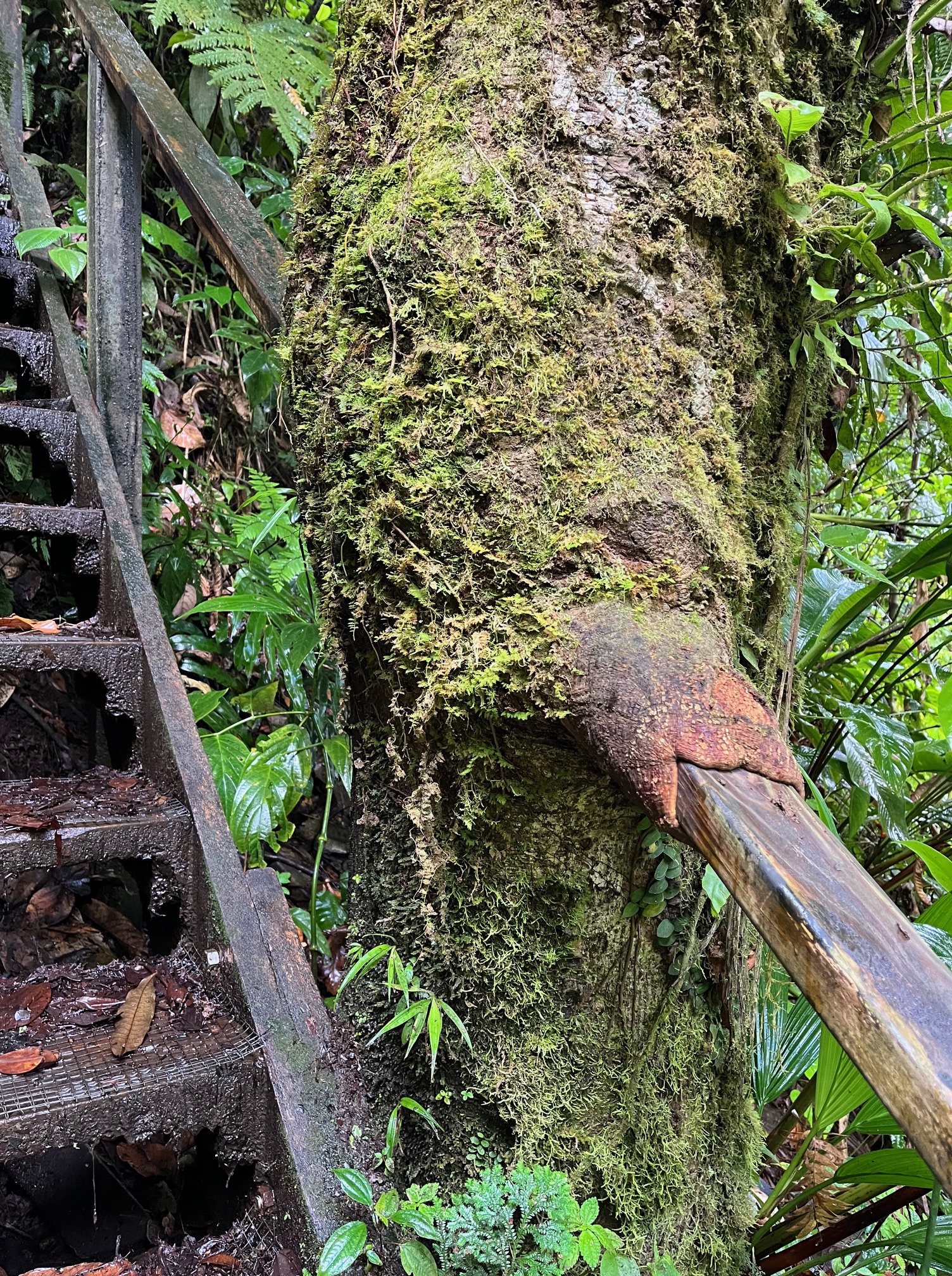
With abundant rainfall, trees grow fast finding ways around human structures
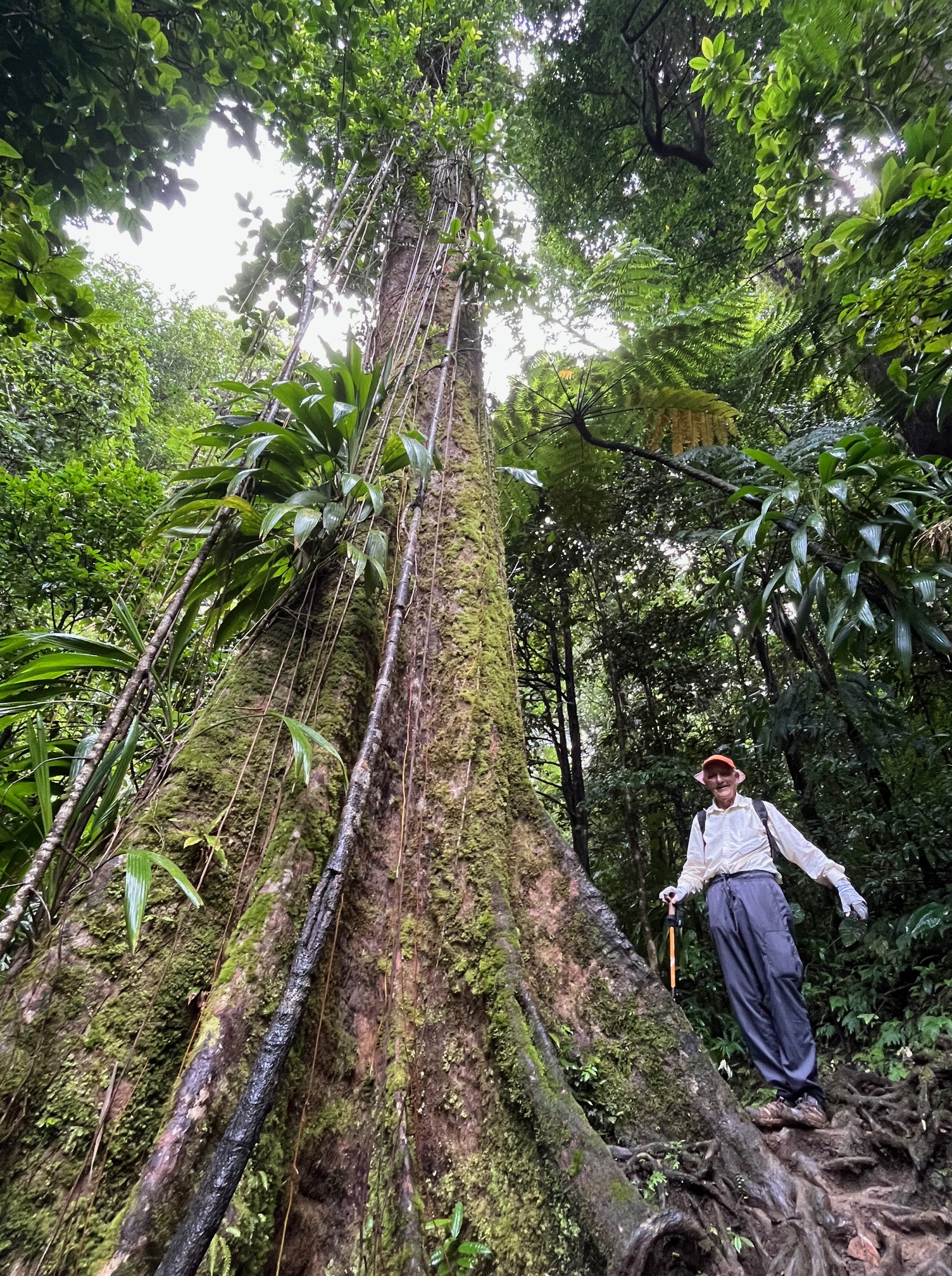
Chris Doyle next to a towering tree
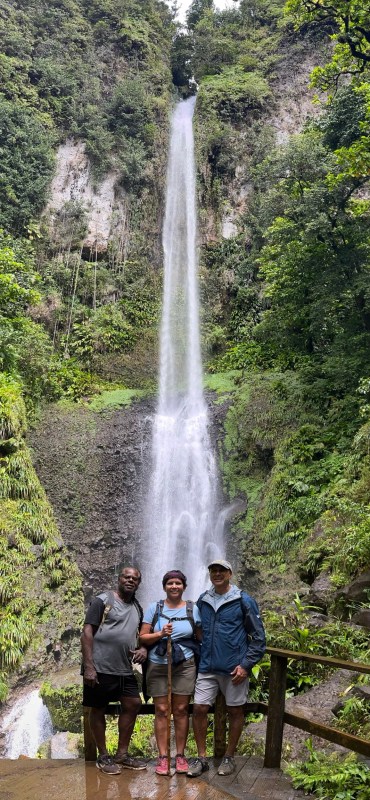
With our guide Octavius “Seacat” Lugay at the Middleham falls
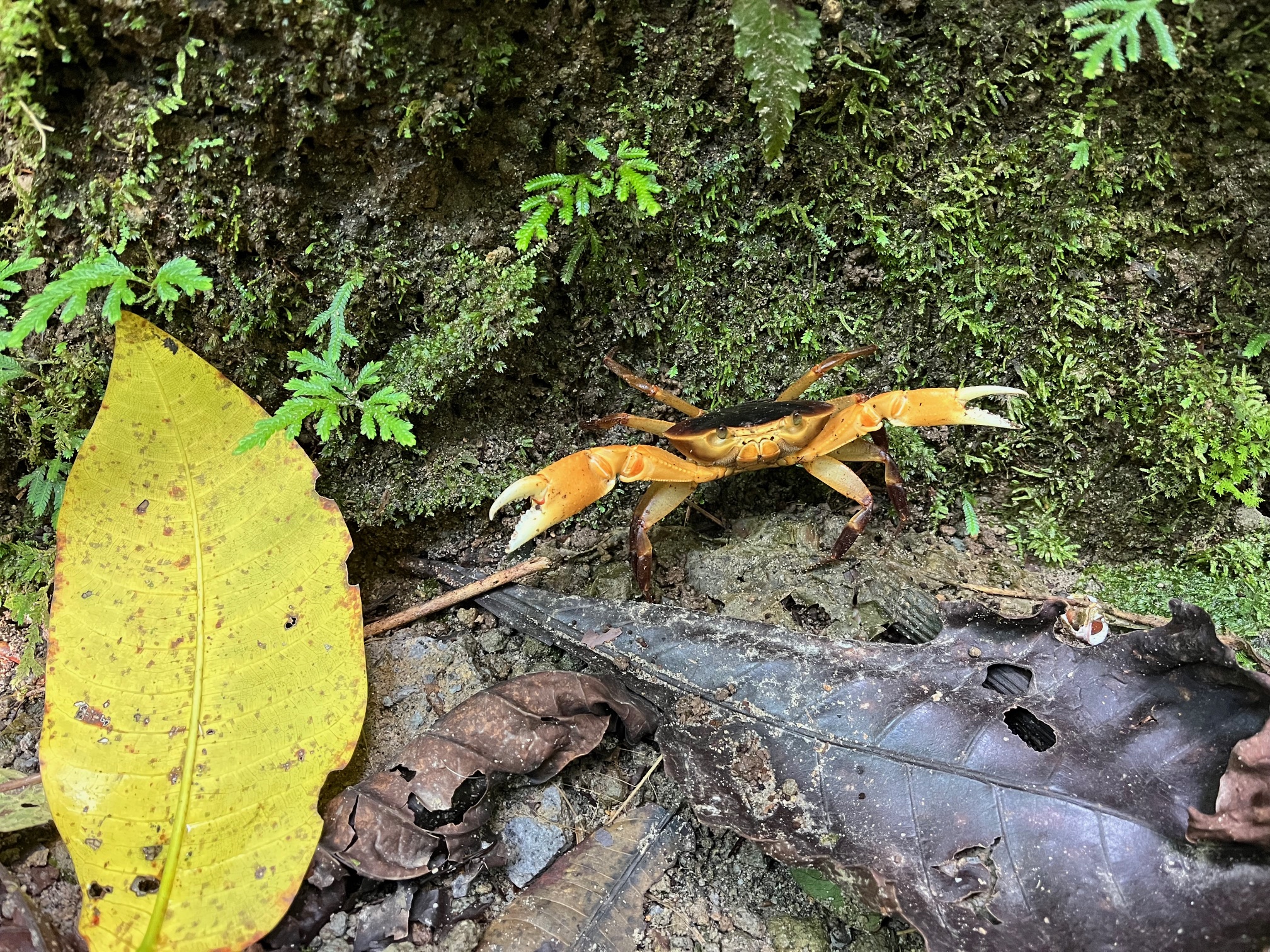
This particular Dominica resident on the Trafalgar Falls trail was not too happy about being photographed
During our time in Dominica, we visited many other waterfalls, including Trafalgar falls, Titou Gorge and the Emerald pool. At Titou Gorge, you swim against a fast flowing stream through a narrow gorge, which opens up under a waterfall. There are ropes in places on the walls of the gorge, to help you push against the force of the fast flowing stream. Its exhilarating to make the effort and the view is certainly rewarding. Emerald pool is at at the base of another waterfall. Each waterfall is experienced in its unique way beyond just observing it from a view deck.

Jungle land for sale- Any takers?
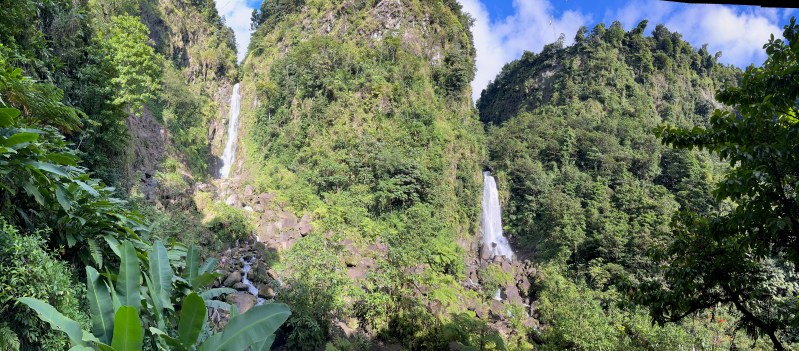
Trafalgar falls are twin waterfalls within close proximity to Roseau


A small 40′ waterfall cascades into a crystal clear pool called the Emerald Pool. The filtered light through the leafy canopy gives it the amazing color
Mero Beach


(L) Local rum punch being made on Mero beach
(R) Grilled tuna with rice, lentils and other fixings
We were finally able to catch up with Andy McCluskie and Diedre in Mero Beach. They sailed across from Martinique to visit us at Mero. We met Andy when he crewed with us from the Canary Islands to Cape Verde. Meeting them again was a real treat and we loved our canine visitors too who crew with Andy and Diedre on their boat SV Falkor. Like us, Andy and Diedre are cruising the Caribbean, but with two lovely canine companions.

Portsmouth
Portsmouth is a short sail up the coast from Mero. We took a PAYS mooring ball from Eric Spaghetti. There is a lot to do and see around Portsmouth and we spent the next few days exploring several sites.
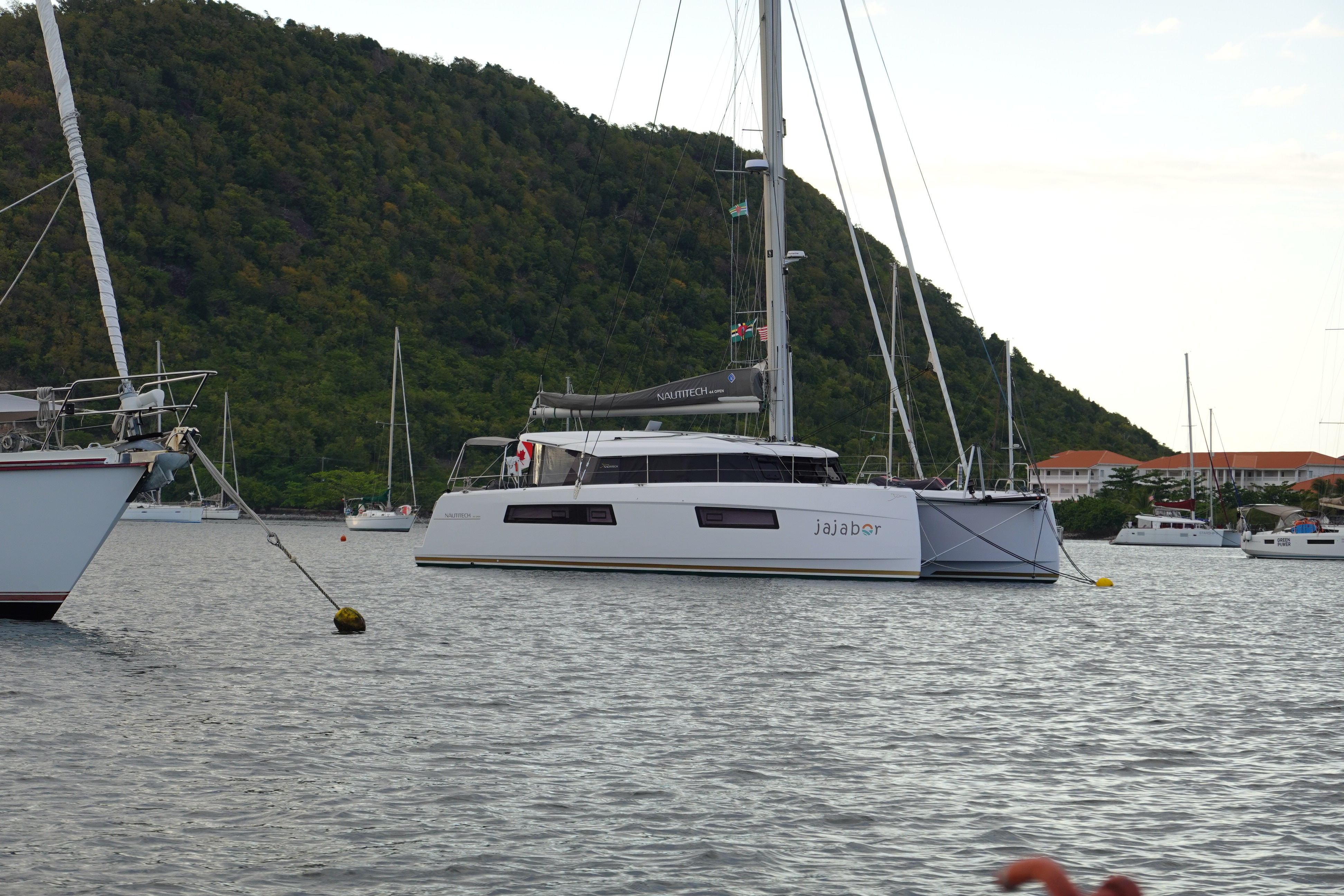
Jajabor moored in Prince Rupert Bay

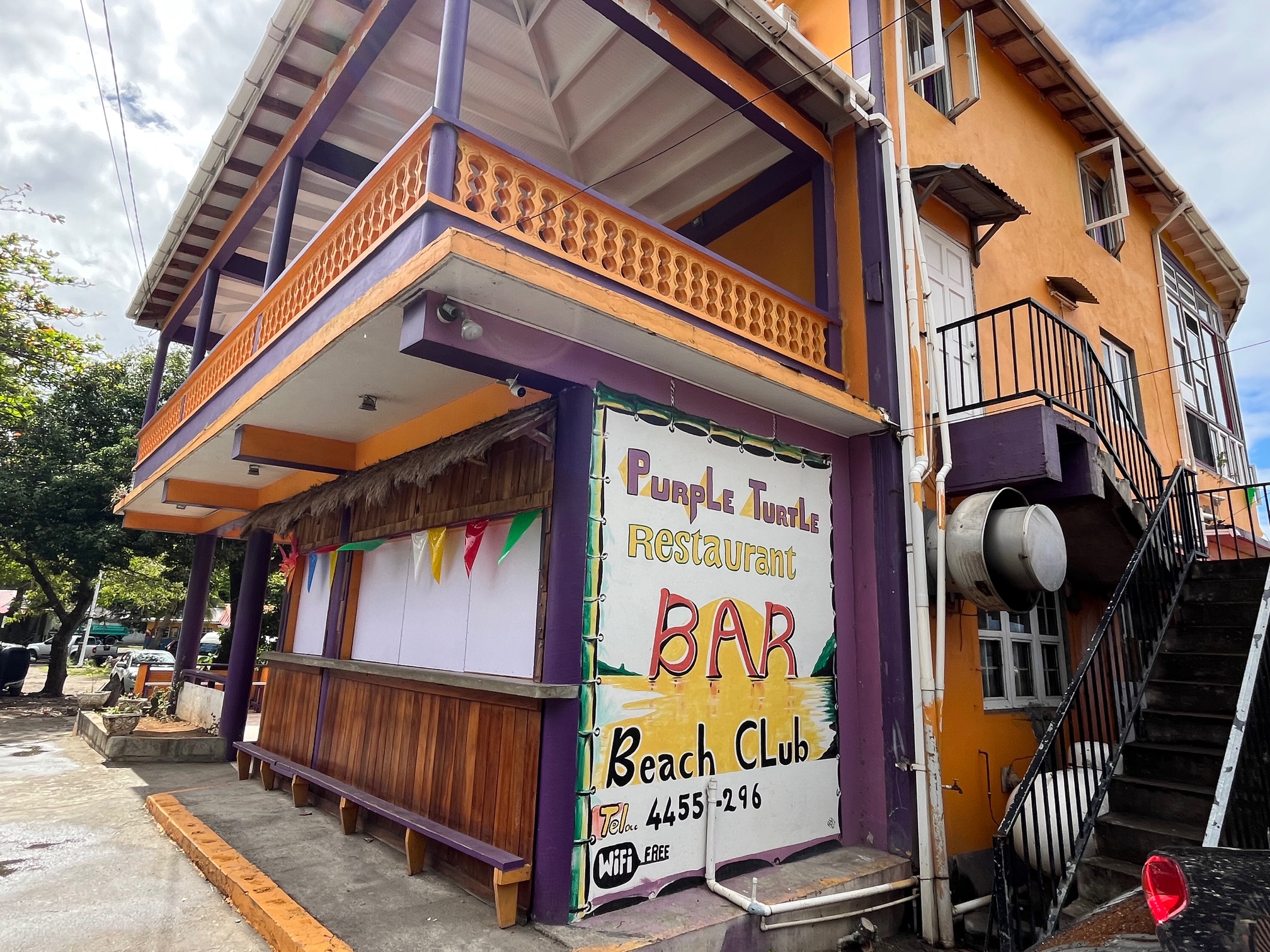
(L) Portsmouth main street (R) The Purple Turtle beach bar and restaurant

Colorful mural on a storage container
Cabrits National Park
Fort Shirley, a UNESCO world heritage center is in the Cabrits National Park. You can see the remnants of 18th-century ramparts & barracks, with sweeping bay views toward Portsmouth. This used to be a British Military outpost. Part of it has been beautifully restored, but other parts of it are slowly being devoured by the rainforest. We hiked several trails in the park to various ramparts and ruins.
Fort Shirley is the scene of the famous revolt of the 8th West India Regiment in 1802 when African slave soldiers took over the garrison for three days in protest over conditions there and the fear of being sent to work in the cane fields. Their action resulted in all slave soldiers in the British Empire being made free in 1807.

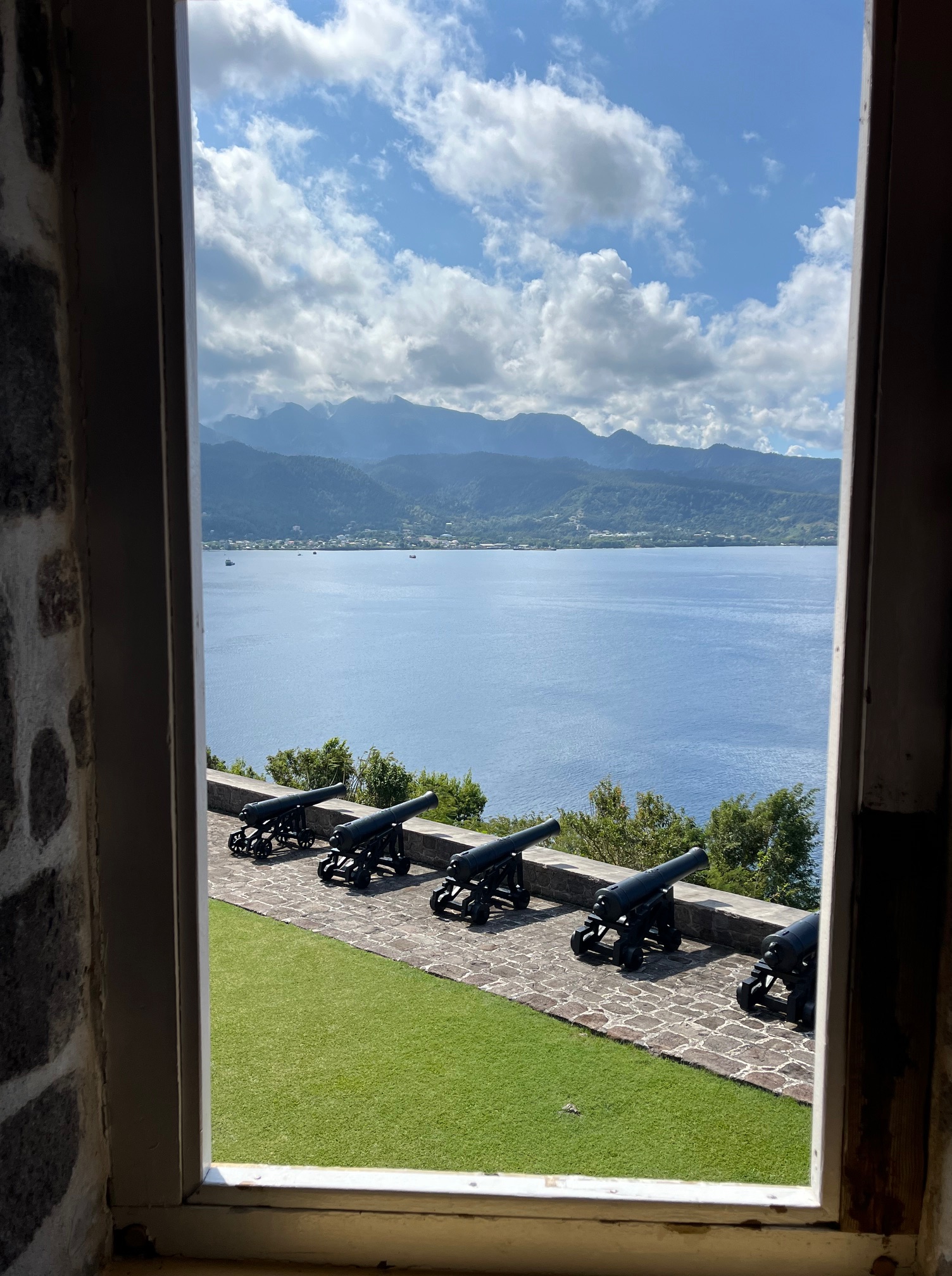

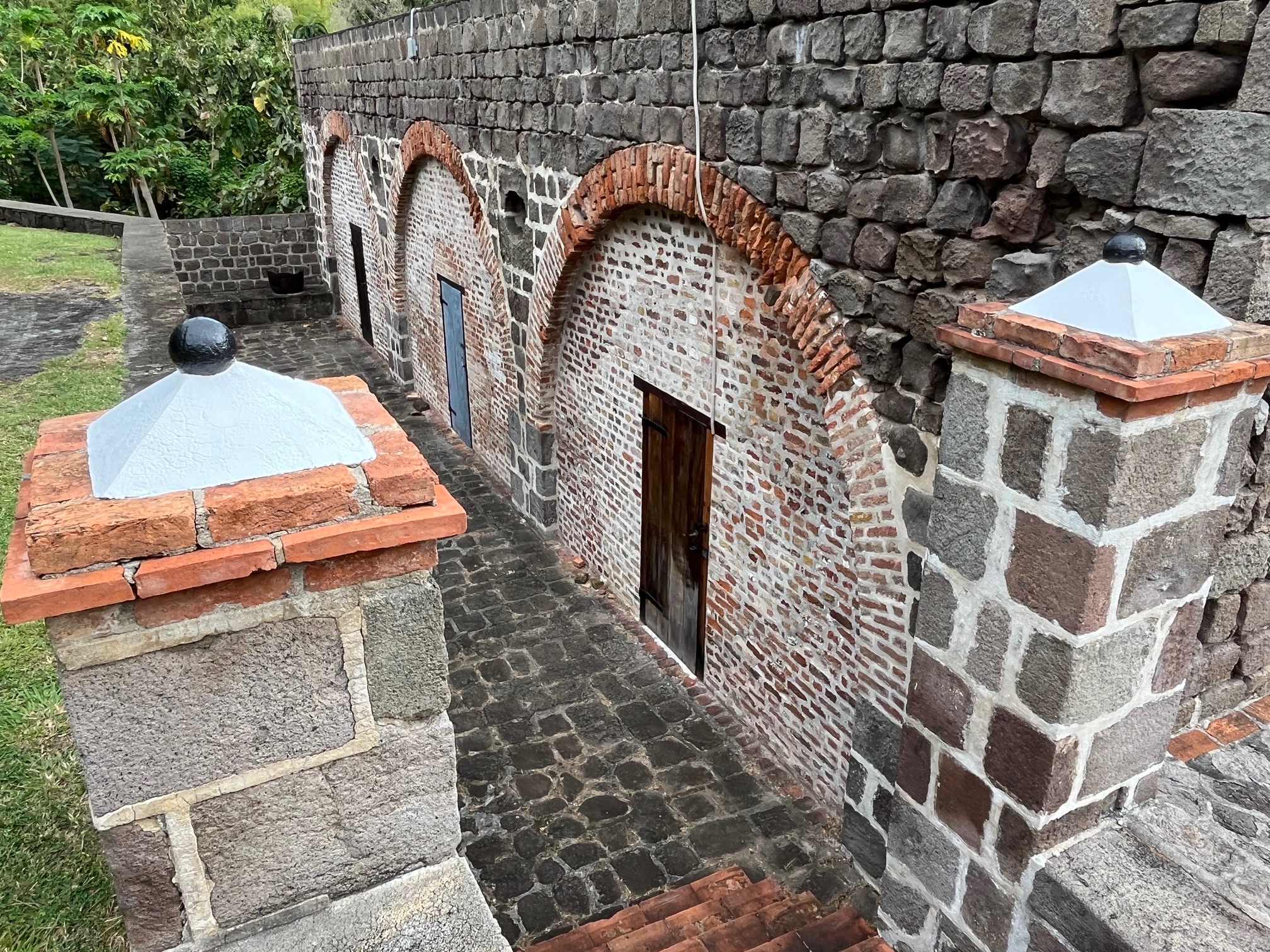

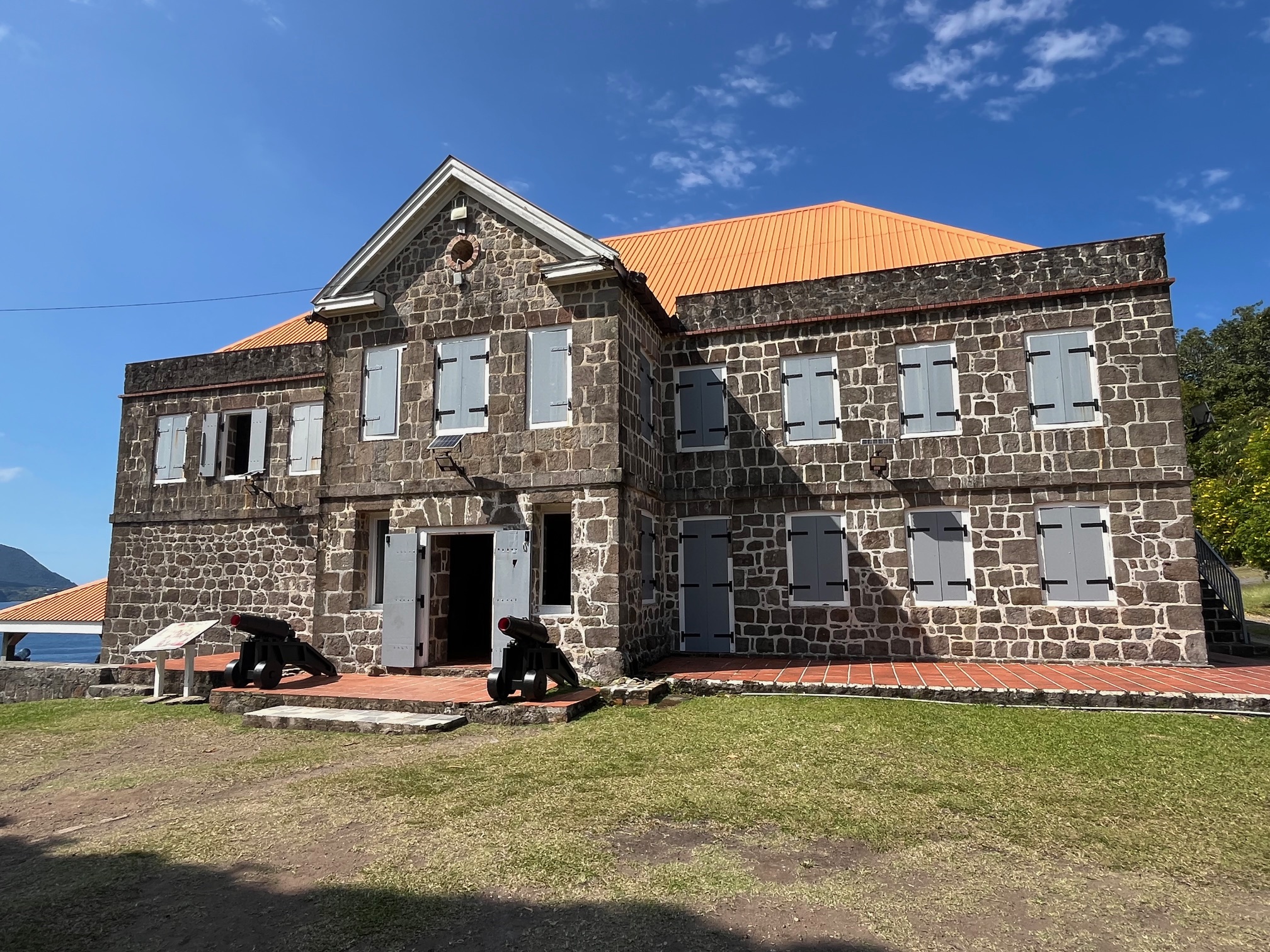
(L) Painting of the ruins of the officers building (R) After restoration
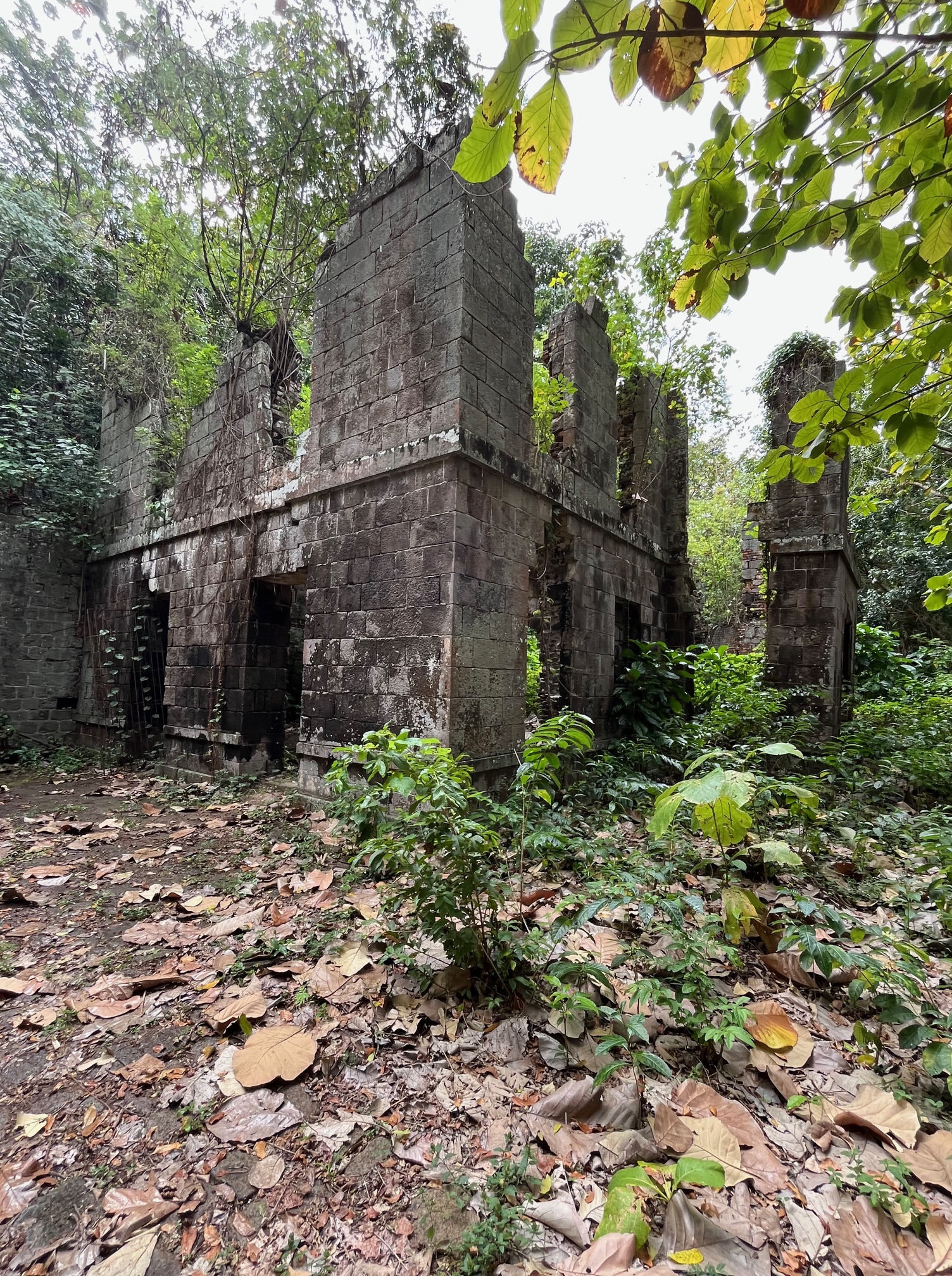

Ruins of the Commander’s House


(L) Royal emblem on the cannons
(R) The jungle is fast reclaiming the battery fortifications
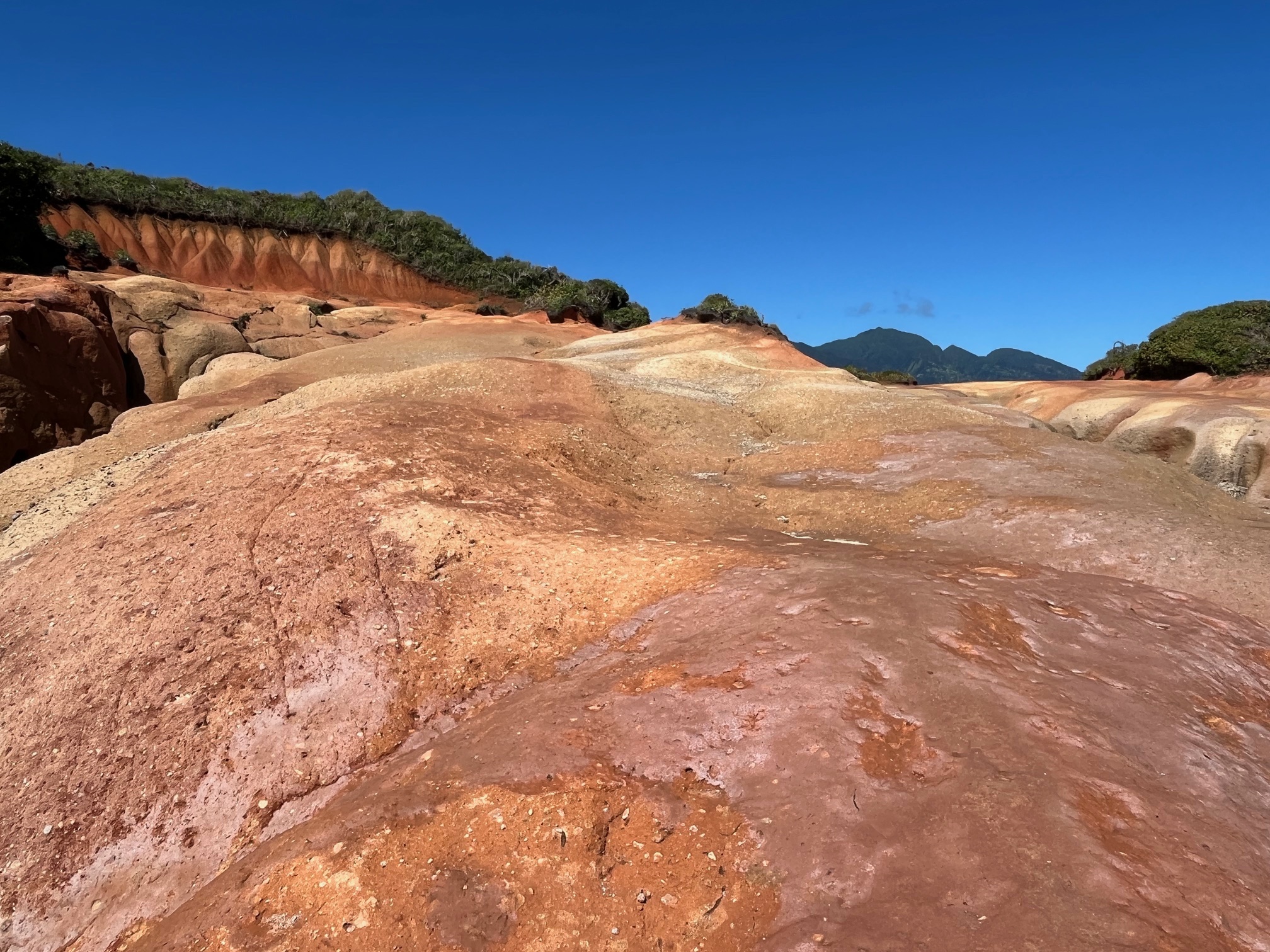
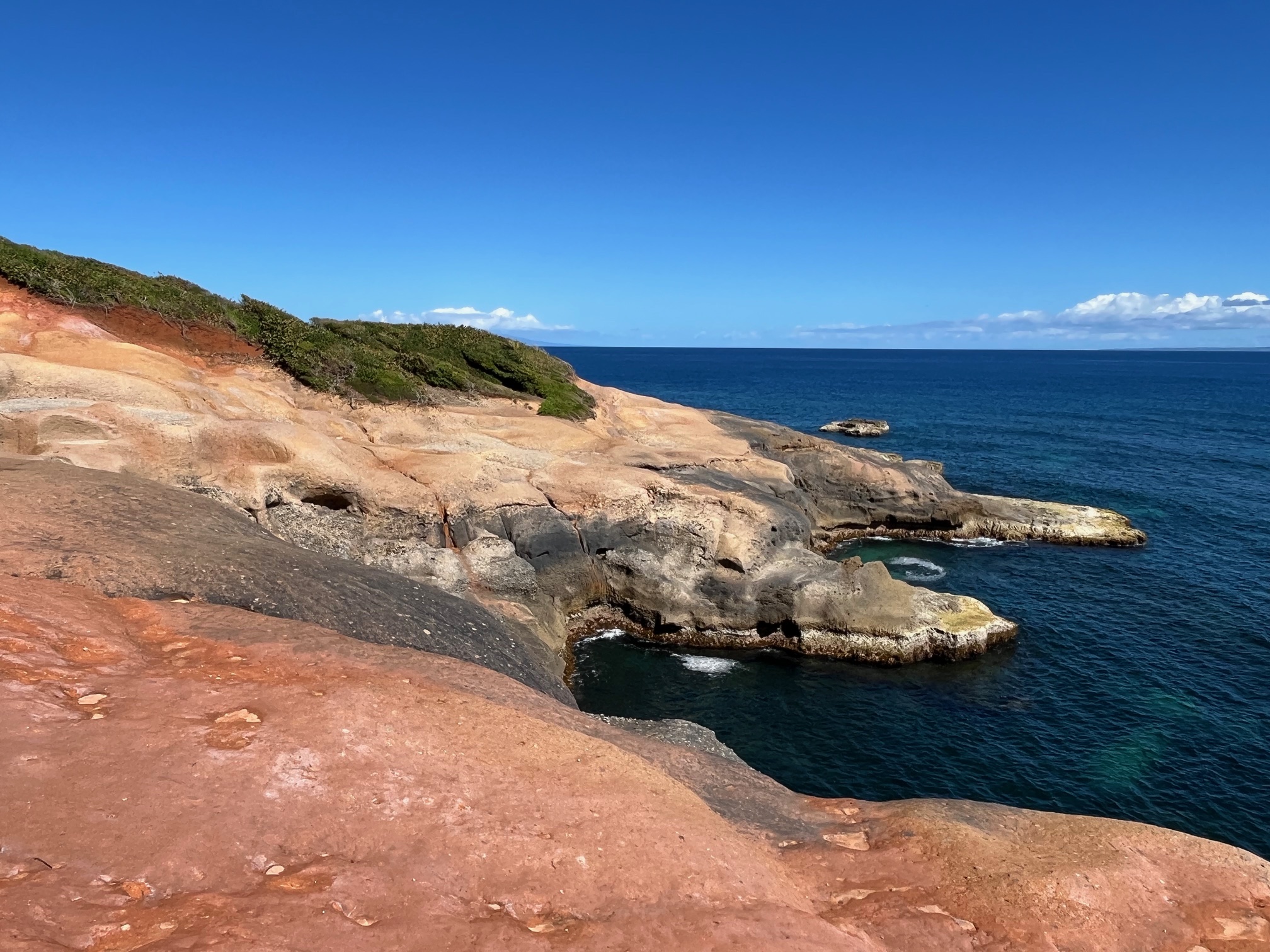
It’s not just tropical forests in Dominica. Along the north-east coastline there are red rock formations overlooking the Grand Baptiste Bay that are quite striking.

Kalinago Territory
Kalinago are the indigenous people who inhabited the Caribbean islands before they were “found” by the European colonizers and settlers. They are commonly known as ‘Island Carib’ or simply ‘Carib’. Today, Dominica is one of a very few islands where the Kalinago were able to protect their lives and way of living by retreating to remote inaccessible areas of the island. These areas were later designated as reservations. What’s impressive about Dominica is that as a country they have been very successful in their efforts to protect and integrate their indigenous population. Sylvan Burton, a Kalinago, is the first woman and indigenous president of Dominica!
The Kalinago practice a sustainable way of living. They are very skilled in basket weaving, carving and other crafts.
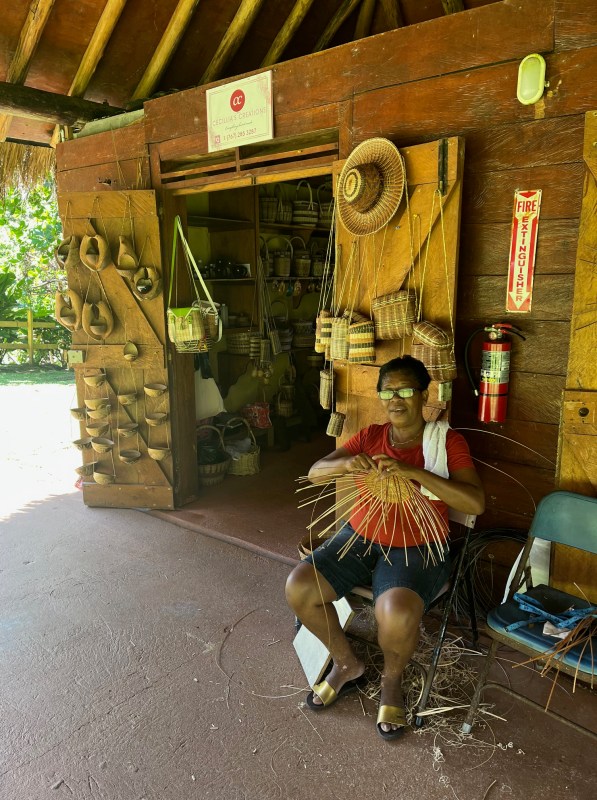
Weaving blades of Larouma reeds into exquisite baskets
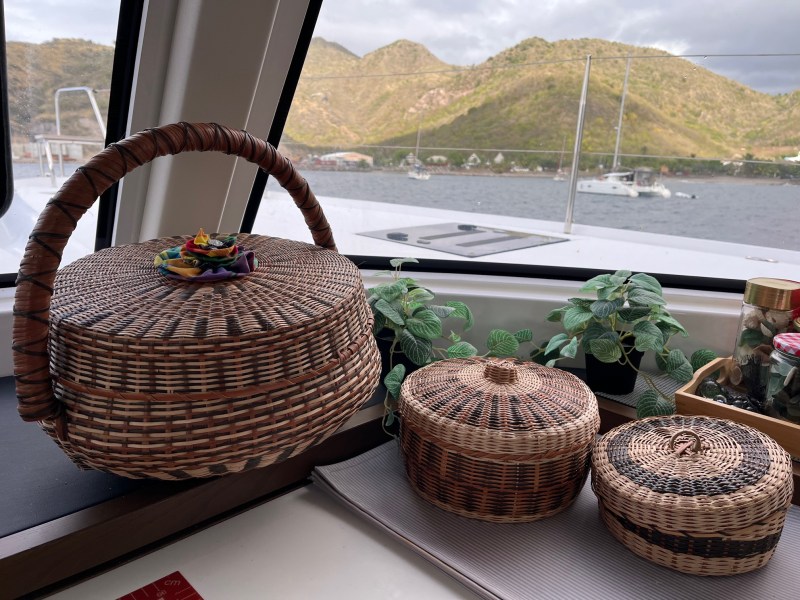
Kalinago baskets in daily use on Jajabor – big one for snacks, medium for eggs and the small one for “Chappatis” (Indian flat bread)

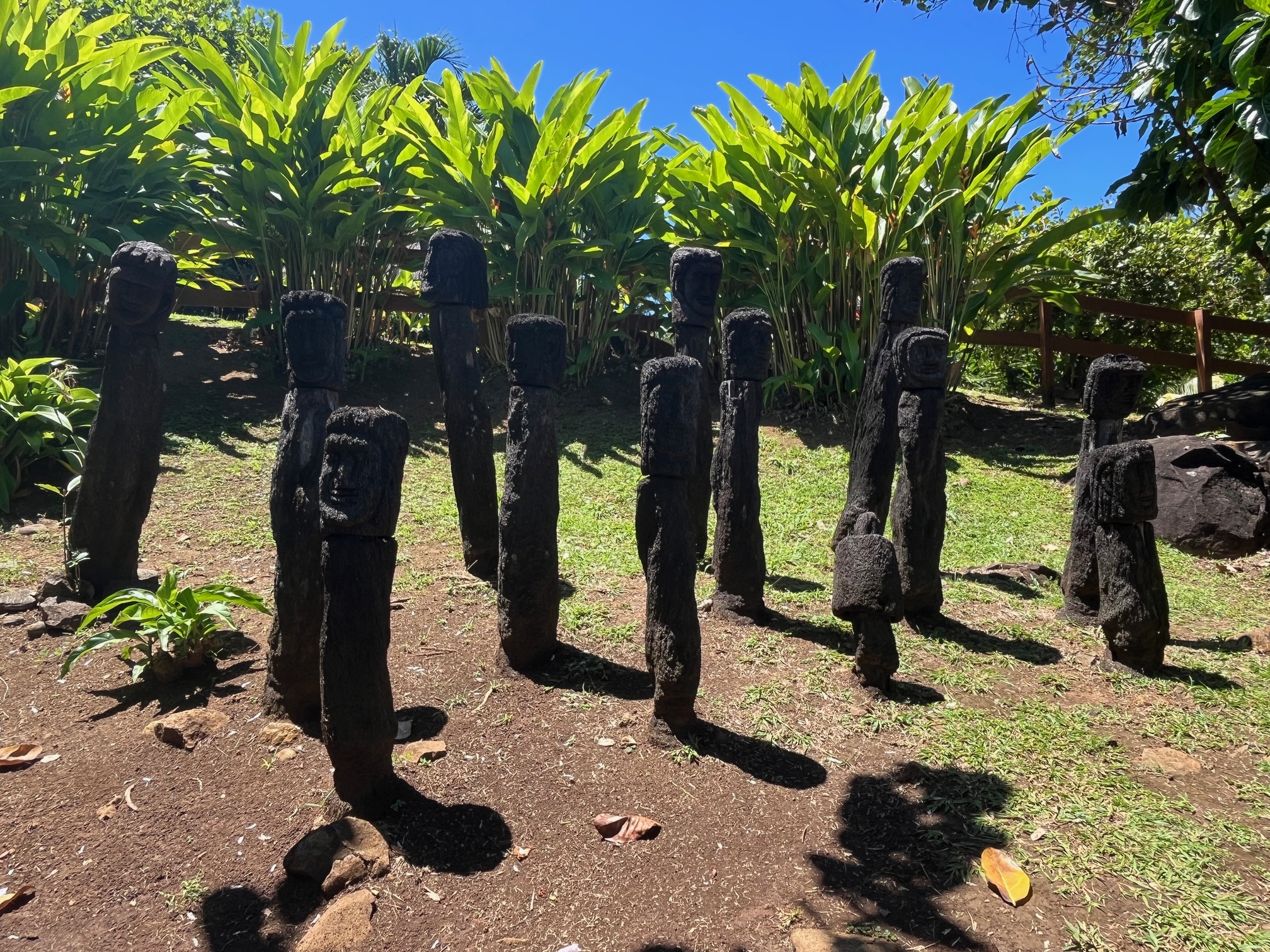
(L) Along a trail in the Kalinago Territory
(R) The bark of the tree fern is used for making head carvings
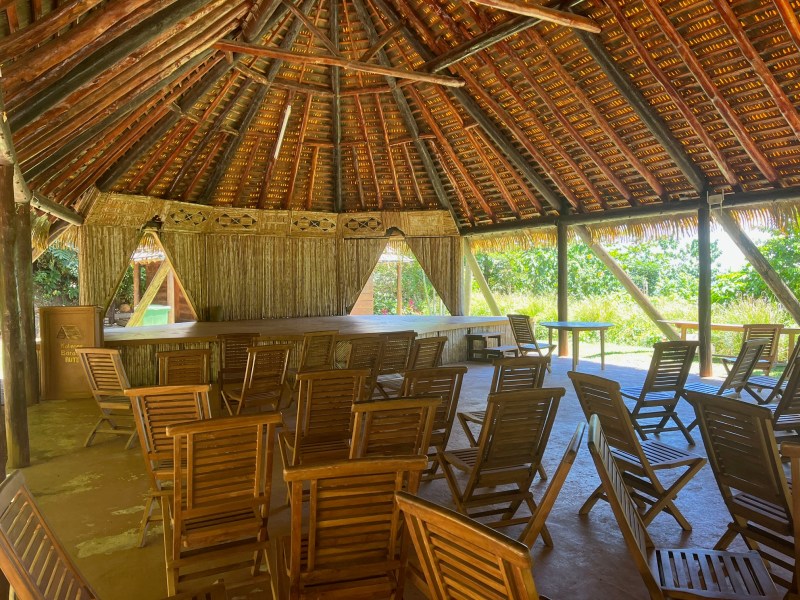
All structures, including this community hall, made from naturally harvested materials.
Indian River
Dominica has lots of rivers and streams, about 365 of them! The Indian River is the widest of them all. In its final stretch it flows slowly through the flat wetlands, called the Glanville Swamp, south of Portsmouth before entering the Caribbean Sea. A silent boat tour of this river is considered a must for any visitor to the island.
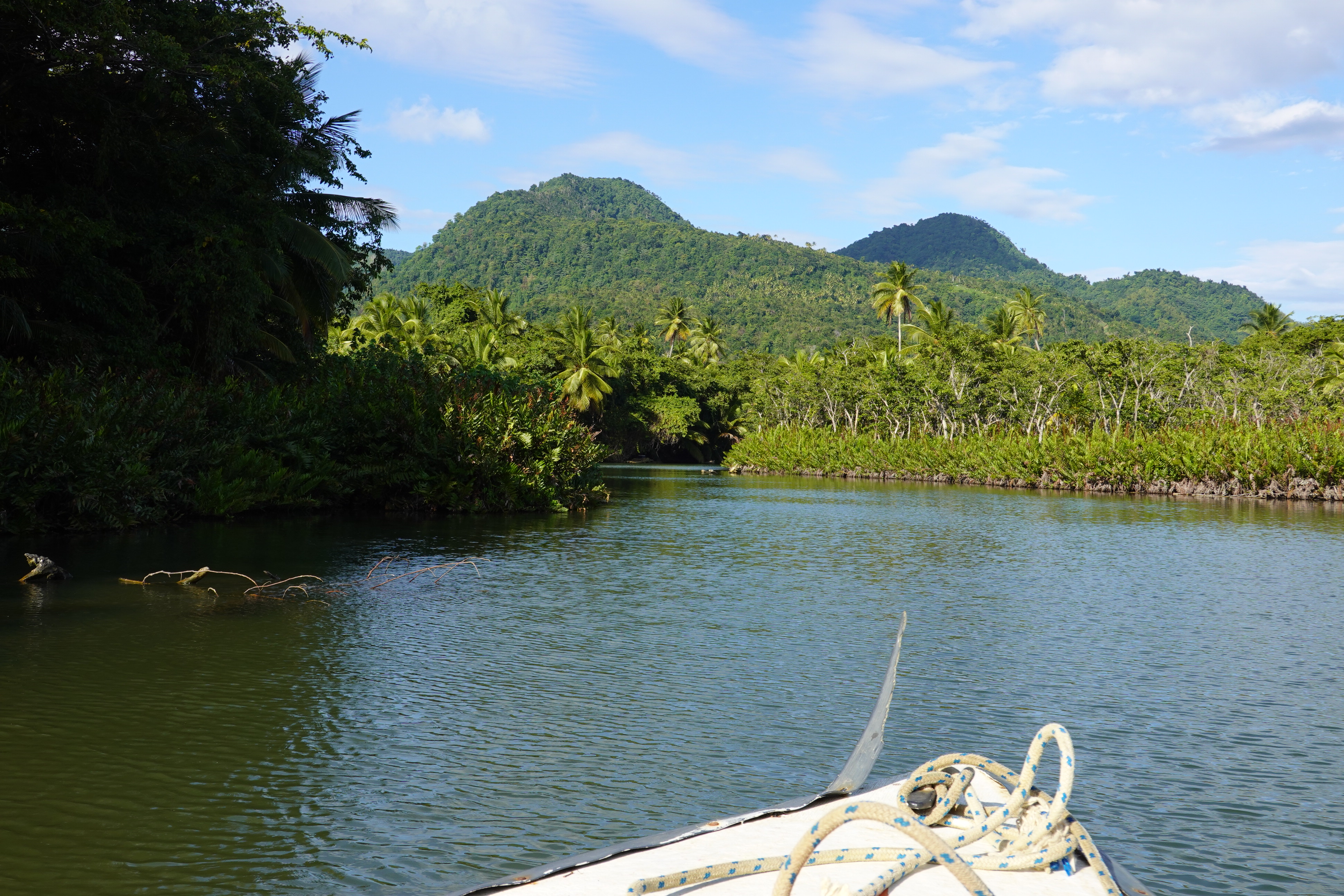


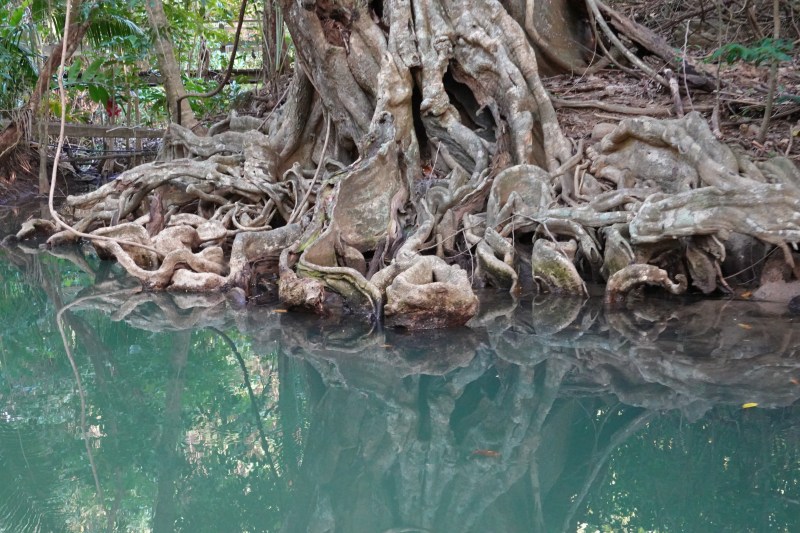
And if you thought that the above picture looks like a witch’s house right out of some Pirates of the Caribbean movie then you would be exactly right – as “Dead Men’s Chest” was filmed right here! As we go further upriver the canopy grows denser with large Banyan (Ficus) trees that line the river sides. Their enormous buttressed roots twist and fold and their vines come down to the water in places. The reflection of these magnificent trees on the slow moving water makes for a surreal experience.

Dominica did not disappoint, and in many ways surprised us. Like people in many other Caribbean nations, Dominicans have to be resilient. Several hurricanes have devastated the island and recovery is sometimes slow and difficult. Damage from Hurricane Maria in 2017 are still visible. The forest recovers fast, but all over the island there are damaged buildings that were never repaired. Interestingly, China is investing in a lot of infrastructure including an international airport, a hospital, and several schools. There are road signs in Chinese throughout the island.
We left Portsmouth for Guadeloupe hoping to be back in Dominica again someday.
 Sailing Jajabor
You must be logged in to post a comment.