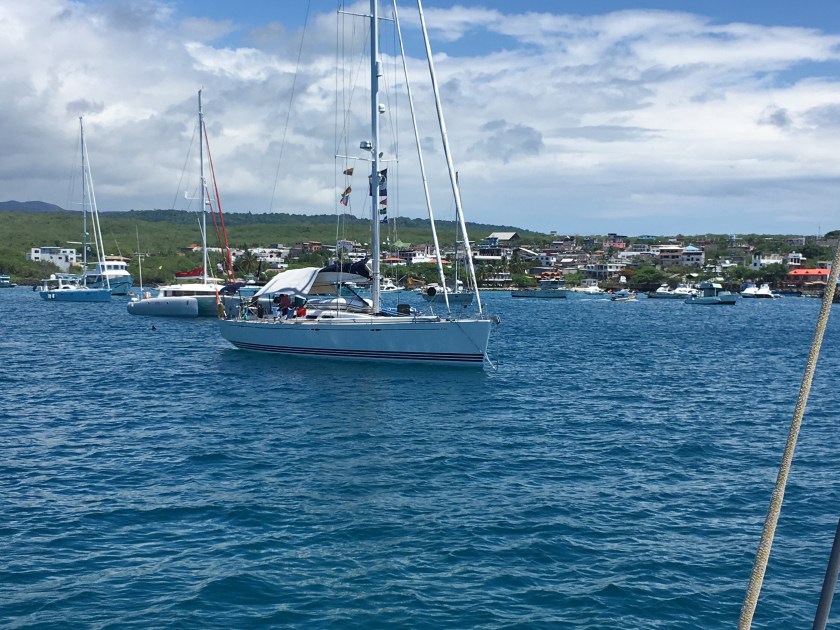
You can’t just sail into San Cristobal. There’s rules and regulations and plenty of them. We were briefed extensively at Las Perlas on the boat inspection, rules on garbage sorting and collection, regulations on what food items are not allowed (eggs, vegetables, fruits, milk, and just about anything you can think of). There is a quarantine process, and you cannot leave the boat until everything has been thoroughly inspected and given a clean bill of health. There is a quarantine flag that you have to fly until you have been inspected and cleared. If there is any undesirable stuff on the hull, the boat has to be taken 45 nautical miles out to be cleaned and then return for re-inspection. So we were sailing in with our fingers crossed, our garbage sorted, our produce consumed or discarded, and a whole pumpkin hidden under the stairs in plain sight.
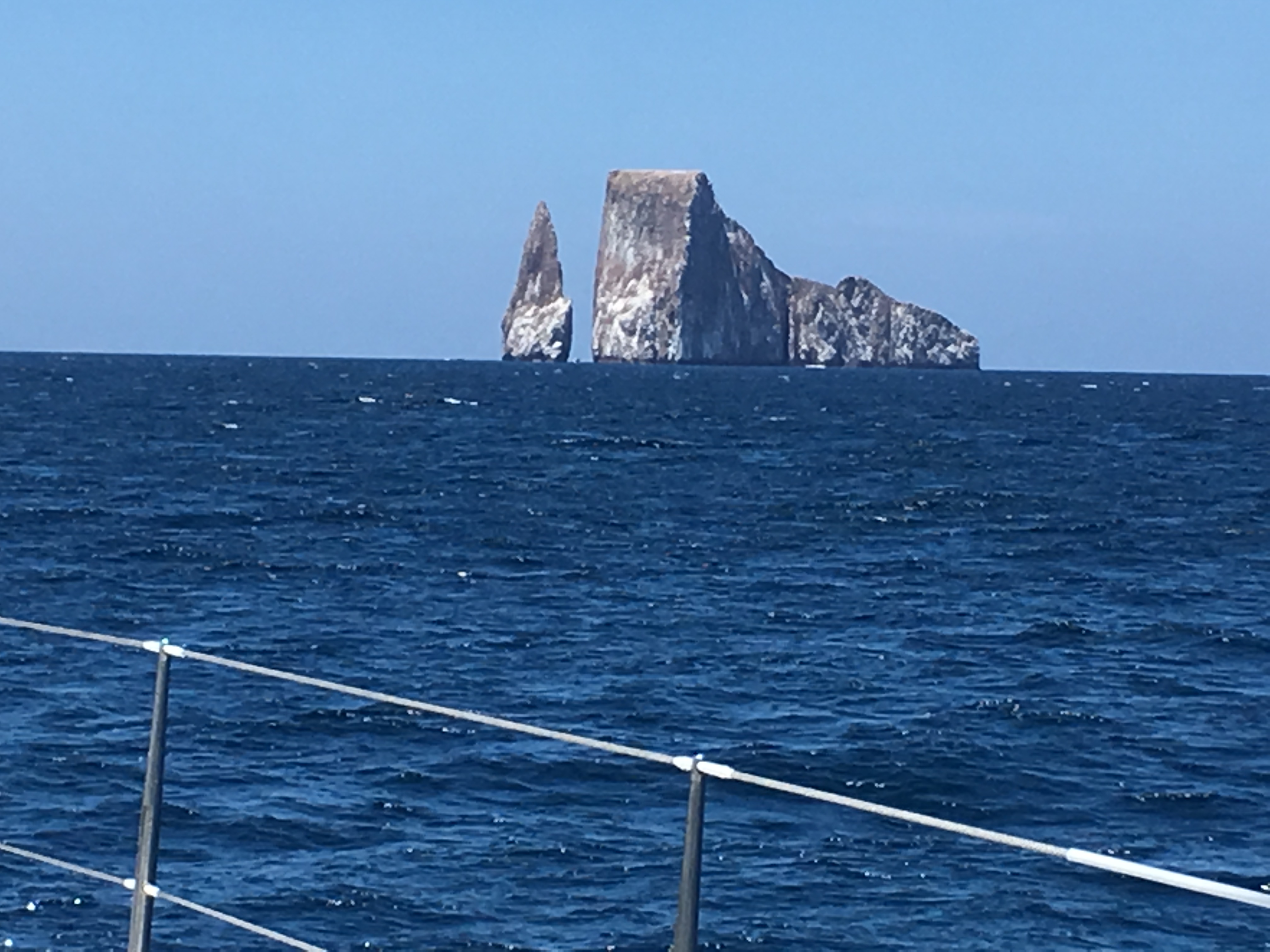
We arrived at San Cristobal around noon. San Cristobal is named after the patron saint of seafarers- St. Christoper and Puerto Baquerizo Moreno is the main town on the island. We passed Kicker Rock, an iconic rock tower(s) rising vertically above the sea. We would be visiting this landmark a few days later. We anchored in the bay facing the town. Some of the boats in the flotilla, with big powerful engines that had mostly motored their way were already here. The ocean along the equator in this part of the world has virtually no wind and that is described as the Doldrums. If we had relied solely on sails it would have taken us 20 days instead of 5.
The water around our boat was very clear and teaming with fish. Moments later, a sea lion came to investigate, seeking a place to rest. Not ready to welcome him or her on our boat, we placed fenders on the steps to prevent any sea lions from climbing aboard. In the next half hour, we saw a sea turtle, a sting ray and a shark around our boat.
Although Joe had cleaned the hull well in Las Perlas, you never know what critters tag on during an ocean crossing. While we waited for the boat inspectors and the immigration officials to show up, we were not even allowed to swim around the boat. I was beginning to feel that we could be carrying the plague. A couple hours later, a water taxi with a pirate flag came flying towards us, and a menagerie of official looking people came on board.
Now there were about 16 people on deck and it was a snug fit. Some checked out the cabins below. A few others inspected our boat equipment such as an EPIRB, emergency raft, first aid kit. The immigration official inspected our passports, and a couple others checked all our food items. Nobody noticed the pumpkin under the stairs.
To help the process along, we rallied the support of Ms. Tully who is 5 years old and a ray of pure sunshine in a small package. She is the youngest member of the Charm family and everybody instantly likes her as she is incredibly sweet and cute. We exploited her cuteness shamelessly by having her carry snacks and drinks for the inspectors and speak to them in Spanish.
When the boat inspectors showed up, Tully was pushed forward to greet them and offer them pretzels and nuts. Tully showed the immigration official how she used her swing to swing around the mast and very soon the inspector was swinging from one side of the boat to the other. Officials in stiff uniforms took selfies with Tully. The net result was that we were given the all clear with no exceptions. What hard-hearted official would want to give us a rough time and make Tully sad!
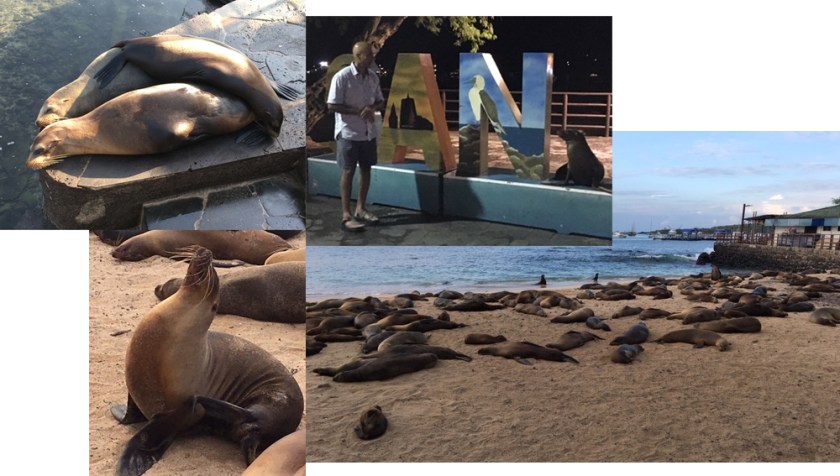
The only way to get to shore is to call a water taxi on the radio. It is 1 USD per person. They pull up next to the boat and you hop in and off you go to the town docks. When you disembark, you must be careful not to step on a sleeping sea lion. That can be terribly injurious to your well-being. There are sea lions everywhere- on the pier, on the beaches, on rocks, on the boardwalks, on the streets, on monument signs- you get the idea! They climb on board boats, and anything else that floats in the water.
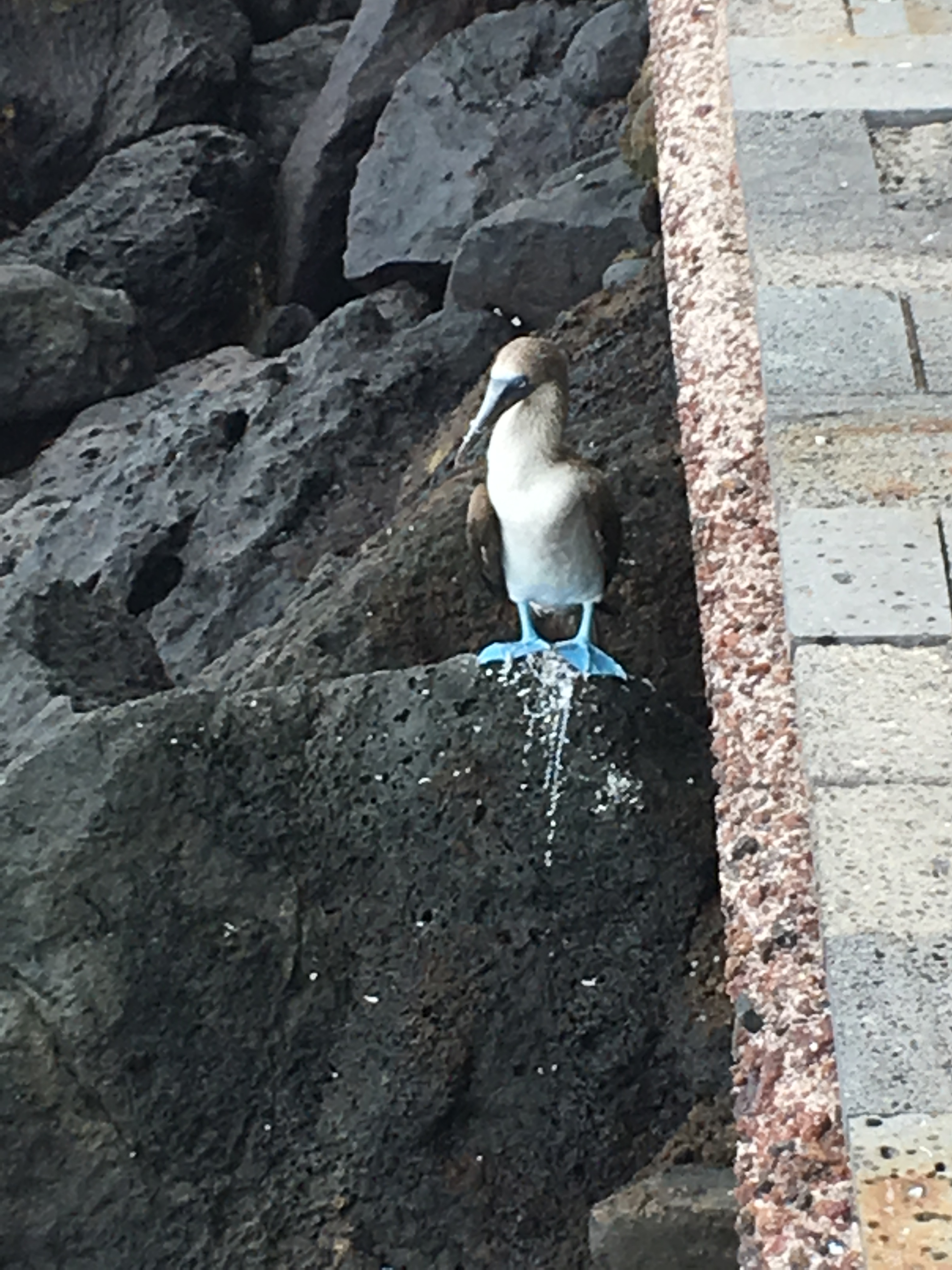
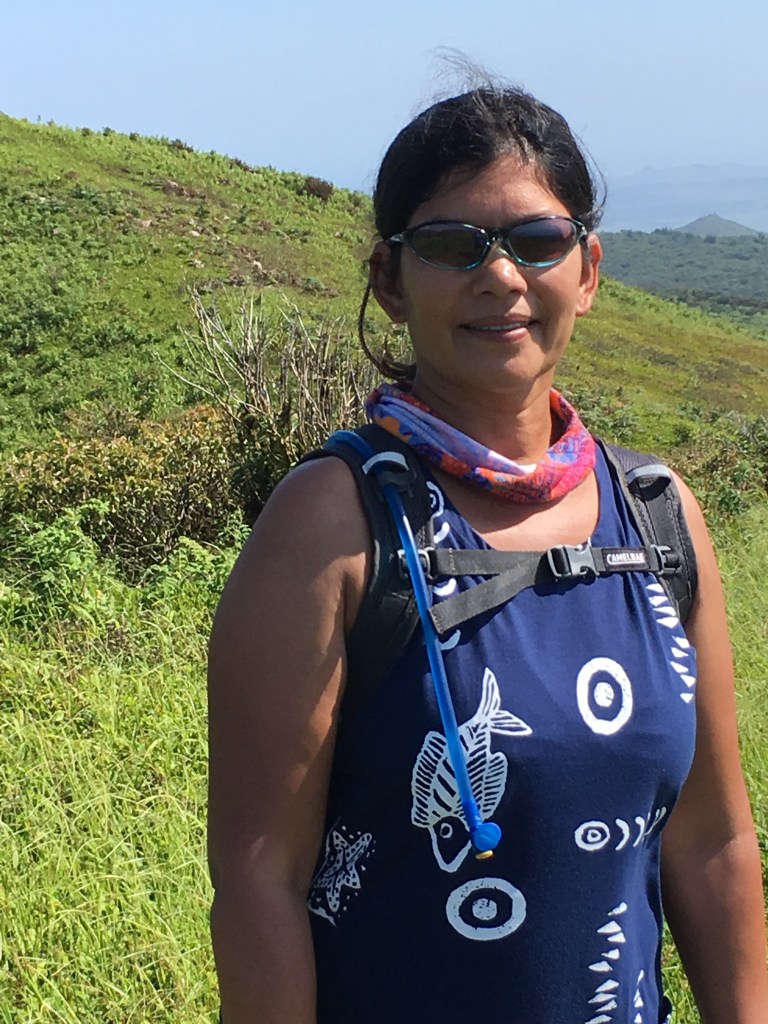
We made our first sighting of the Galapagos blue footed boobies. Marine iguanas are endemic to Galapagos (I heard the word “endemic” used repeatedly over the next few days for all kinds of bird, reptile, and mammal species and there is even a beer called Endemica). They are seen on land but are quite comfortable in the water as well. Our next few days passed quickly in a flurry of sight seeing and tours. Swagata and Ruth walked a 5km trail that traversed through various parts of the island and was punctuated with beautiful vistas of the coastline and the ocean. I, Lara, and Joe chose to run on the trail instead which was challenging in the 10am heat.
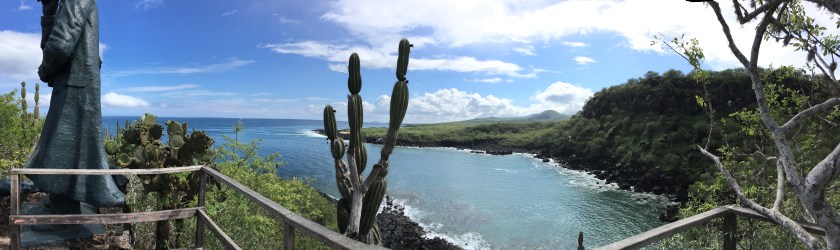
We toured El Junco- a volcanic crater filled with fresh water, which is the largest fresh water lagoon in the Galapagos. It was a steep 30-minute climb, taxing mostly due to the heat and humidity in the air, but we were rewarded with panoramic island views across the lake. There were many frigate birds swooping down and splashing the surface of the water to clean salt off their wings. As they flew away, they would shake themselves dry like dogs do.
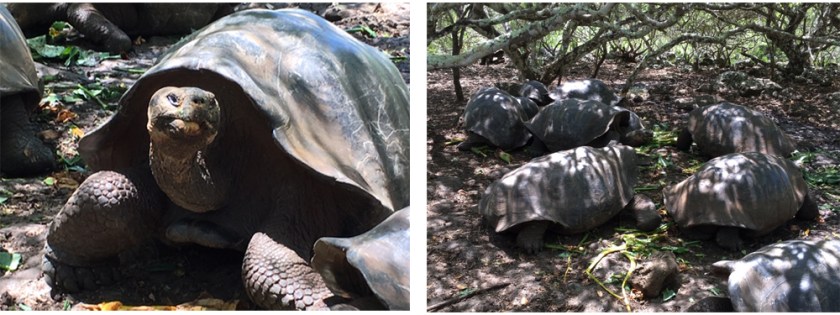
A visit to the Breeding Center of the Giant Tortoises followed, where the Endemic species for San Cristobal island is taken care of and bred. It is estimated that there were about 200,000 such tortoises in Galapagos before it became a stopping point for buccaneers, whalers and other mariners. Their population was decimated to less than 2000! Tortoises can live without water or food for months and so were taken as fresh meat by sea faring people on their long journeys. A changing climate, with multiple dry years, reduces the supply of fresh water and also contributes to diminished mating among the tortoises. In fact, certain species of tortoises in the Galapagos are extinct and the entire population wiped out on some smaller islands like Florena. Ecuador with the help of various conservation organizations is making a concentrated effort to regenerate their numbers using the latest breeding techniques and limiting human development to a small portion of the island.
The flotilla social hour is in the evenings and adults and children gather at a local watering hole. Children race around outside, while inside, stories about the day’s adventure are traded along with mariner’s talk which is fascinating to listen to. Engine problems are discussed as easily as Boobie sightings. There is talk about participating in the Tahiti Pearl Regatta and Joe has been rallying the forces to assemble a team of racers. There is waxing and waning interest as details are discussed. Pretty soon, the revelers break up into groups and drift to various local eateries for dinner. Plans for the next day have already been made and discussed. While this may seem like a nonstop vacation, it is really a brief respite before the next long leg to the Marquesas islands and the inevitable boat duties of sailing, cooking, watches, and school for some.
 Sailing Jajabor
You must be logged in to post a comment.